
On Ten-Four, Stats Are 90% of the Game [Konasho Monthly vol.4]
How much of an opponent's leak can you read from just VPIP, PFR and 3-bet? We walk through six real stat lines — the loose caller, the winning nit, the losing nit, the guy whose numbers look fine but keeps losing — with three Seeker Start regulars.

Written by konasho (X: @konasho)
A quiz for you.
You are the coach of a high school basketball team, and you have just booked your place at the national championship. Scouting your first-round opponent, you find that their red-haired first-year — a monster on the boards — has scored 17 points across seven games, broken down as
- Free throws 3 pts
- Layups 6 pts
- Close range 4 pts
- Dunks 4 pts
What weakness would you expect this player to have?
The Answer
🎯 He can only score from extremely close to the basket
Against this player the rational defence is to let him shoot freely from anywhere outside, and spend the saved attention tightening up on number 11, their real scoring threat.
Spot the weakness in the numbers, then build your defence around it. Poker is no different. If you can picture an opponent's leak the moment you see their stats, that has to be worth something to your win rate.
"Well? Doesn't that get you excited?"
So what goes through a strong player's head when a distinctive Ten-Four stat line comes up? I asked three people who know.
- The don of Seeker Start, arashi
- The embodiment of consistency, nogaado
- Fast legs, strong arm, and champion of Oumizan, socha
Case 1: In the Pot 34% of the Time — a Batting Average That Would Win the Title
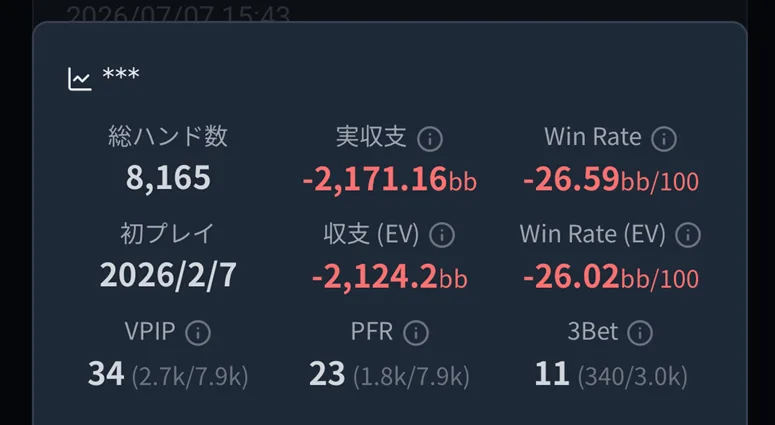
A serious loose caller. He 3-bets his strong hands, but his calling range is stuffed with far more than pockets and suited connectors — there are piles of high-low combinations in there too. Wide c-bet to knock out the trash, then decide based on his reaction and the board: that works fine as a default. And obviously you want to bet value thick.
With strong high cards like AQ, skipping the c-bet becomes a genuine option. In fact you'd rather skip. If you hit on the turn or river, he holds plenty of hands that lose to your kicker, so your value grows.
The awkward spot is when you check and he bets. Now AQ faces a difficult fold-or-bluff-catch decision. Sometimes you get folded off the best hand, sometimes you hand a pot to a drowning bet made on misread equity — that's largely unavoidable. Against this opponent the EV of your value hands, thin value especially, is inflated.
"When the opponent isn't balanced, it's not that every hand of yours goes up in EV — specific hands go up and specific hands go down. The net result is that the EV of your range as a whole goes up." (socha)
Case 2: A Tight Winner. How Do You Attack a Solid Range?
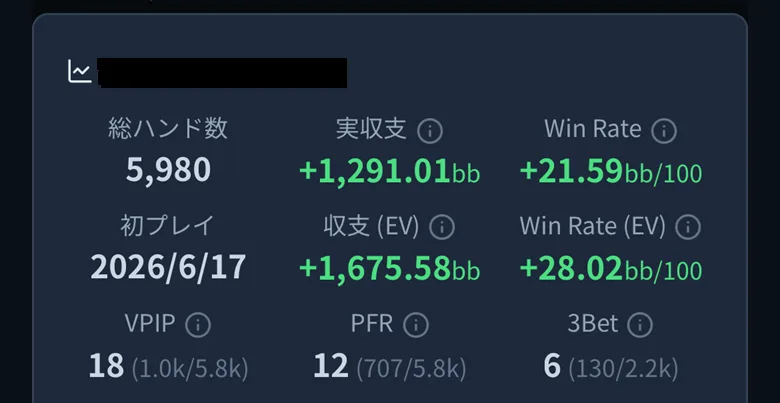
If this is the player in the BB, it's a stealing opportunity. Widen your opening range. If he 3-bets you back, pockets and suited connectors can almost all go in the muck. Against his 4-bet, though, there is a chance he overfolds. At equilibrium, for example, the SB jams middle pockets against a BTN 4-bet at some frequency — but in practice that tends to become a pure fold. Respect the strong range, but it's worth taking a shot.
Postflop the guidance doesn't change. Default to leaning towards overfolding. He usually has a strong hand, so against a double or triple barrel you can't casually call with top pair. When you're the raiser, he has few hands he can fold, so reckless bluffing is strictly off the menu.
This player is simply winning pots with hand strength. A positive win rate doesn't necessarily mean a high skill level. Chip away with steals and protect your stack by overfolding.
Case 3: Tight, and Yet Deeply in the Red. Where Do You Attack?
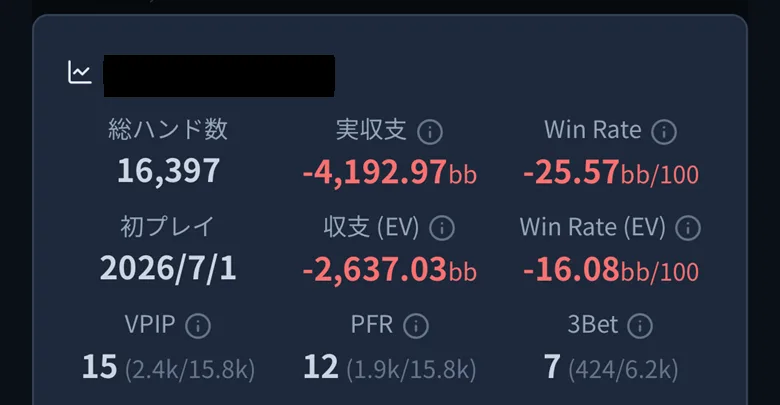
His preflop range is tight as well, so the basic approach is the same as Case 2. Go after him with steals.
On top of that, postflop is your chance to win a big pot. This player almost certainly can't fold a strong hand. When you make two pair or better, take the maximum out of his AA and KK. He is another opponent you beat with value, not bluffs.
Case 4: The Stats Look Fine. But Losing This Much Means There's a Way In
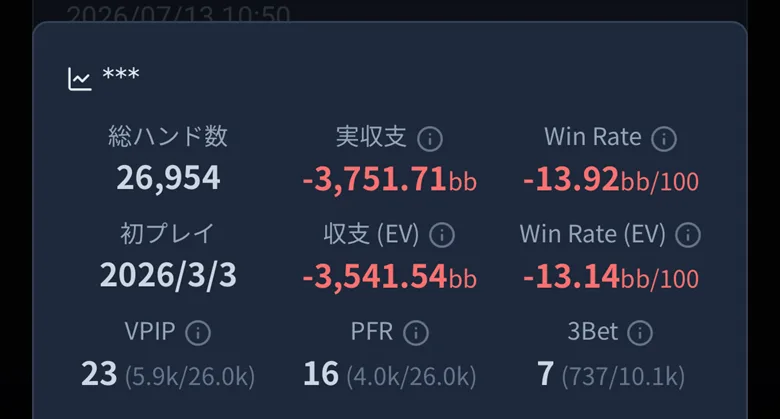
He has memorised preflop ranges to some degree, but there's a good chance he doesn't know postflop equilibrium. In the Ten-Four environment, tough calls and over-bluffing are especially costly, and this player likely has one of those leaks — or both.
The slightly low 3-bet number makes it very likely he's the tough caller. One-street bluffs only work here as a way to fold out trash. Push your value bet sizes up, and when a hand is on the fence between checking and betting — an ID hand — lean towards betting.
📝 What is an "ID hand"?: A hand that is indifferent. At equilibrium its EV from checking and its EV from betting are identical, so choosing either costs you nothing — which is why these hands end up on a mixed strategy.
Case 5: If You Think Aggression Equals Skill, You're Going to Pay for It
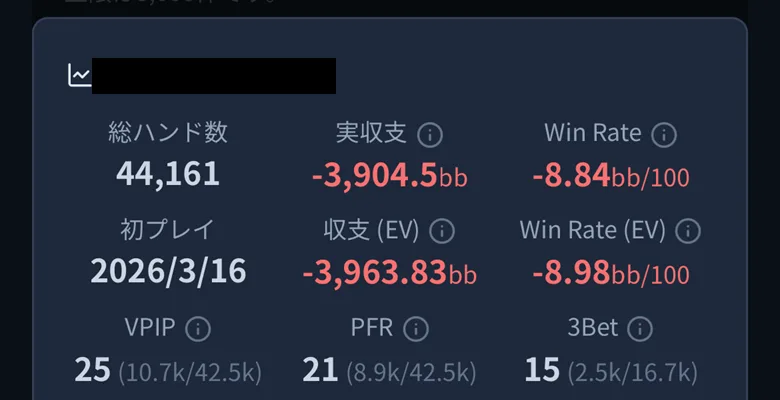
He 3-bets wide, and yet he isn't good at 3-bet pots. You don't get a number as high as 15% without 3-betting things like ATo and KJo even against early opens.
Expect high aggression postflop as well. He picks his boards, sure, but the bluffs don't stop — so while he does turn up with overpairs, reach for the call button with pockets and made hands.
Case 6: Time to Punish the Man Whose Fold Button Is Broken
"Let's go, let's go, let's go Kanemoto — here's our chance, swing away, knock it out of the park!"
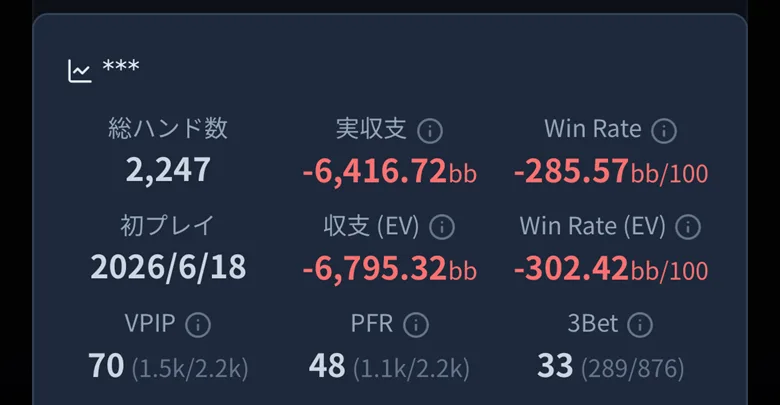
The melody of "Chance Shurai," the hitting theme that rings around Koshien whenever the Hanshin Tigers have the momentum, starts playing in my head. When this opponent opens the BTN and you have TT in the SB, jam that 3-bet without hesitation. If someone behind you is sharp enough to notice you widening your 3-bets you'd want to be careful, but in late position it's easy enough.
Postflop, marginal hands gain value against him, so look for thin value according to your equity. When you're the caller and he fires a triple barrel on a K-high board, break your own fold button with anything decent or better. He can't reach a win rate like this without bluffing every scrap of trash he over-entered with preflop. He'll have the lucky K-low two pair sometimes, but far too much of his range is gutshots and air. Mash the call button with marginal hands and you'll be right more often than not.
A technique for when you do have a value hand: min-raise his c-bet. This type doesn't fold easily — in fact he'll fire a re-raise back at you with something incomprehensible. Punish him properly.
Summary
Six cases, and the job was the same every time. Infer the opponent's leak from the stats, then change your own strategy to match. That's all of it.
Two players can both look "tight" and still need completely different treatment — Case 2 was a winner, Case 3 was deep in the red, and the place to attack was different. When the stats look alike but the results don't, there is always a leak somewhere making up the difference. Just lining up VPIP, PFR, 3-bet and the win rate side by side gets you far enough to picture it.
Let him shoot from outside the paint. It's the same defence we drew up for that first-year, and it's the same job.
If you want to review what each stat means and what a healthy value looks like, start here.

More From This Series




Found this helpful?
Bookmark this page to revisit anytime!
Ctrl+D (Mac: ⌘+D)
Found an error or have a question about this article? Let us know.
✉️ Contact Us