
Blind Heads-Up C-Bet Strategy on K-High Boards (Limp-Raise Line) [Ajo MTT Vol.7]
The K-high companion to Vol.6's A-high deep dive. Same setup — 25bb blind heads-up, SB limp → BB 3BB raise → SB call — but now the flop runs out K-high. We work through K85 rainbow, two-tone, and monotone, and contrast the picture with the A-high case where BB had a free range bet. Vol.7 of Ajo's MTT Strategy Series.
Written by: Ajo (X: @AjoPoker)
Hi, I'm Ajo.
Vol. 7 is the sister piece to Vol. 6. Same blind heads-up setup, same limp-raise line, same K85 trio — but now the flop is K-high instead of A-high, and the postflop picture changes dramatically.
In the A-high case BB just got to range bet everything. With K-high, that free pass disappears: SB's range carries a healthy share of suited Kx hands, so BB's edge is much narrower and the strategy has to dial down both frequency and size.
📌 Setup
- Spot: blind heads-up at 25bb (same as Vol. 1 / Vol. 6)
- Line: SB limps → BB raises (3BB) → SB calls → flop
- Postflop: BB is OOP and the preflop aggressor
- Solution: GTO Wizard ChipEV (no ICM)
💡 Read alongside Vol. 6
The cleanest way to internalize K-high strategy is to compare it to the A-high case. The contrast — when BB still has the lead vs when SB's range starts to catch up — is the real lesson here.
Preflop Recap (from the K-high angle)
SB's open construction
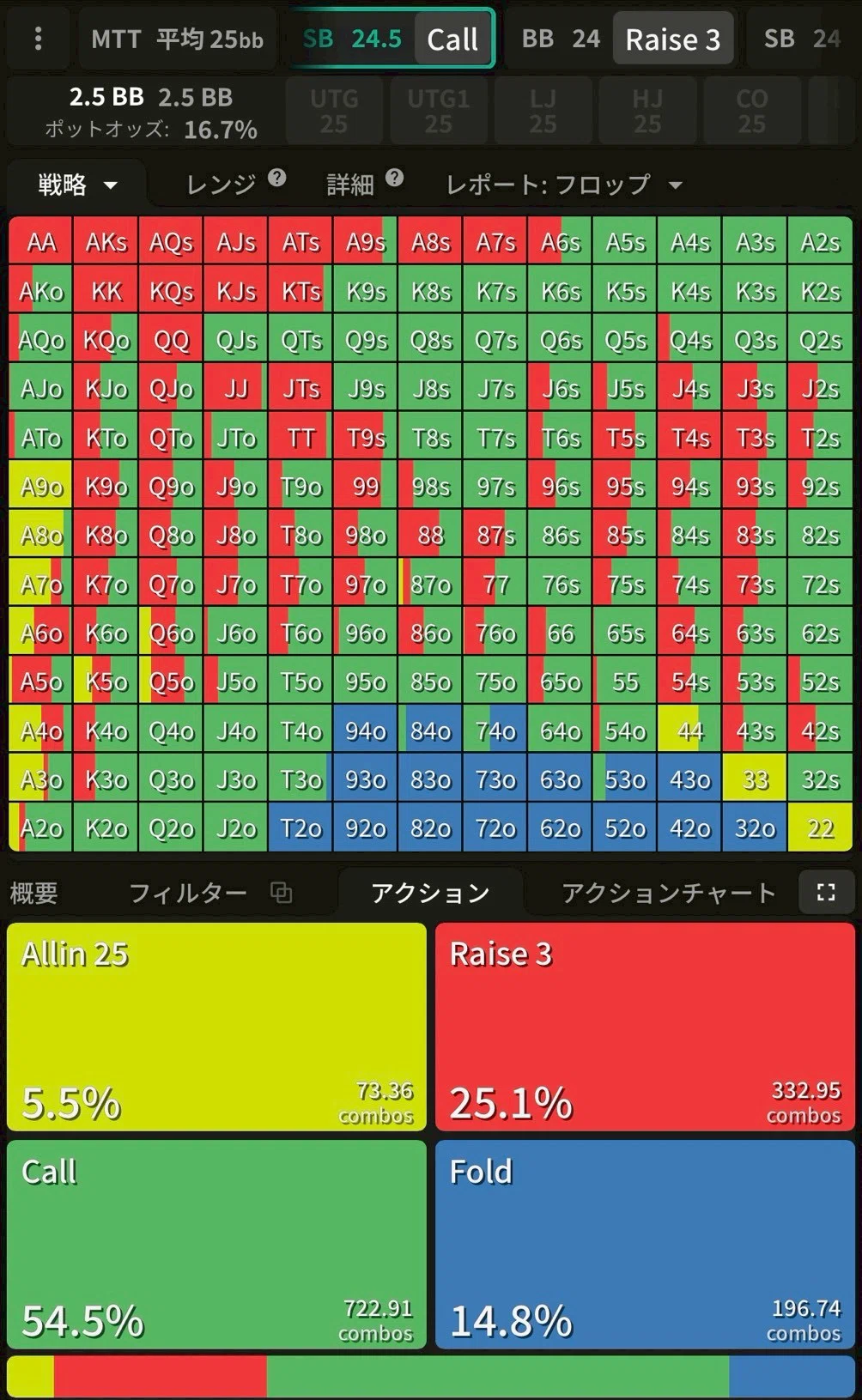
Zooming in on SB's Kx specifically:
- K2s–K9s are pure calls (suited Kx basically all play)
- K3o-plus sit in the mixed jam / call / fold region
- K4o-plus are at minimum call (no folding)
→ The takeaway is that SB's call range is loaded with Kx, especially the suited ones. This is the big difference vs Vol. 6 where SB had basically no Ax.
BB's response to the limp
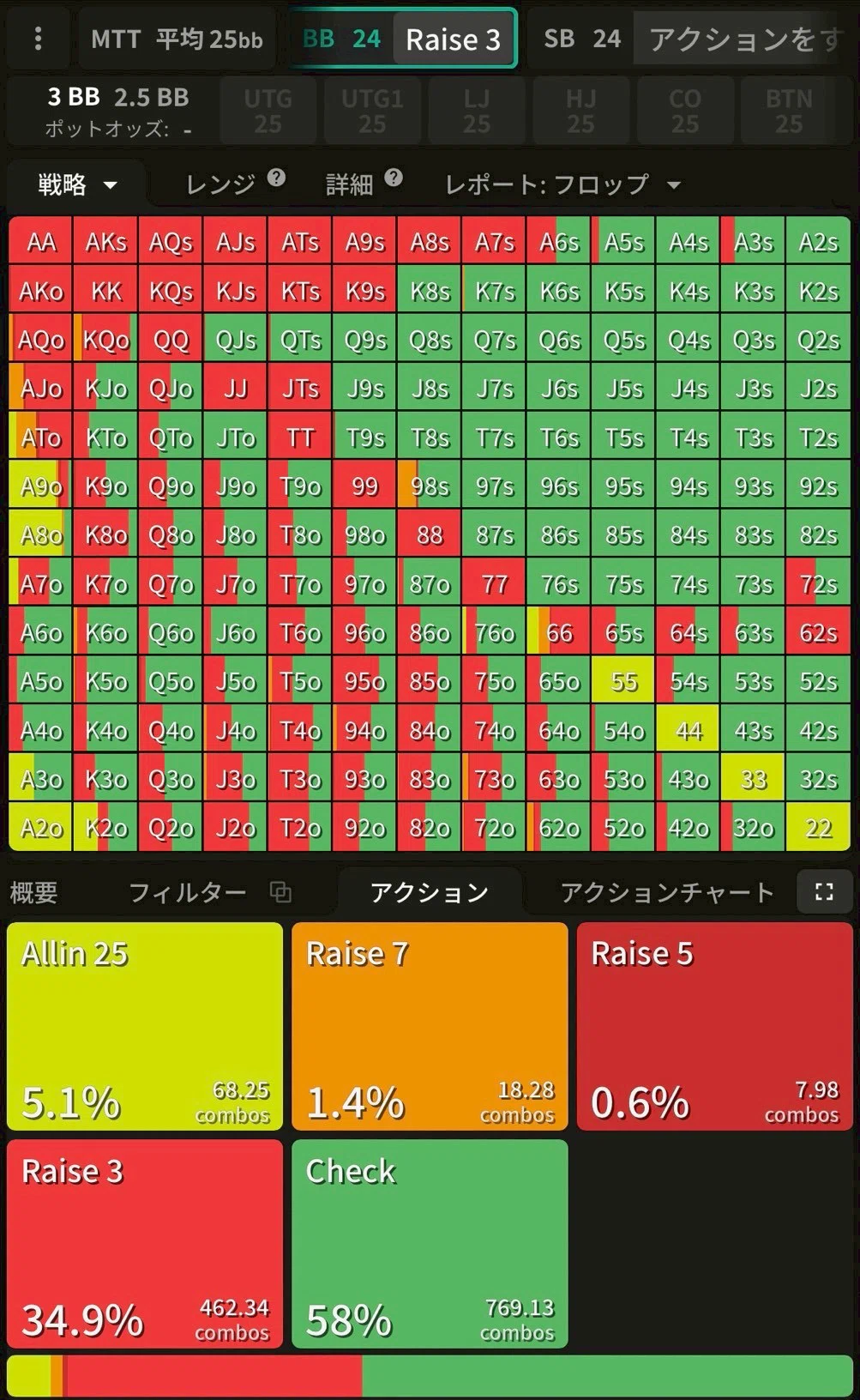
Looking at the Kx split on BB's side:
- K2o–KQo are mixed (indifferent / partial-frequency)
- K2s–K8s mostly call rather than raise
- K9s and up are pure raises
SB's response to BB's raise
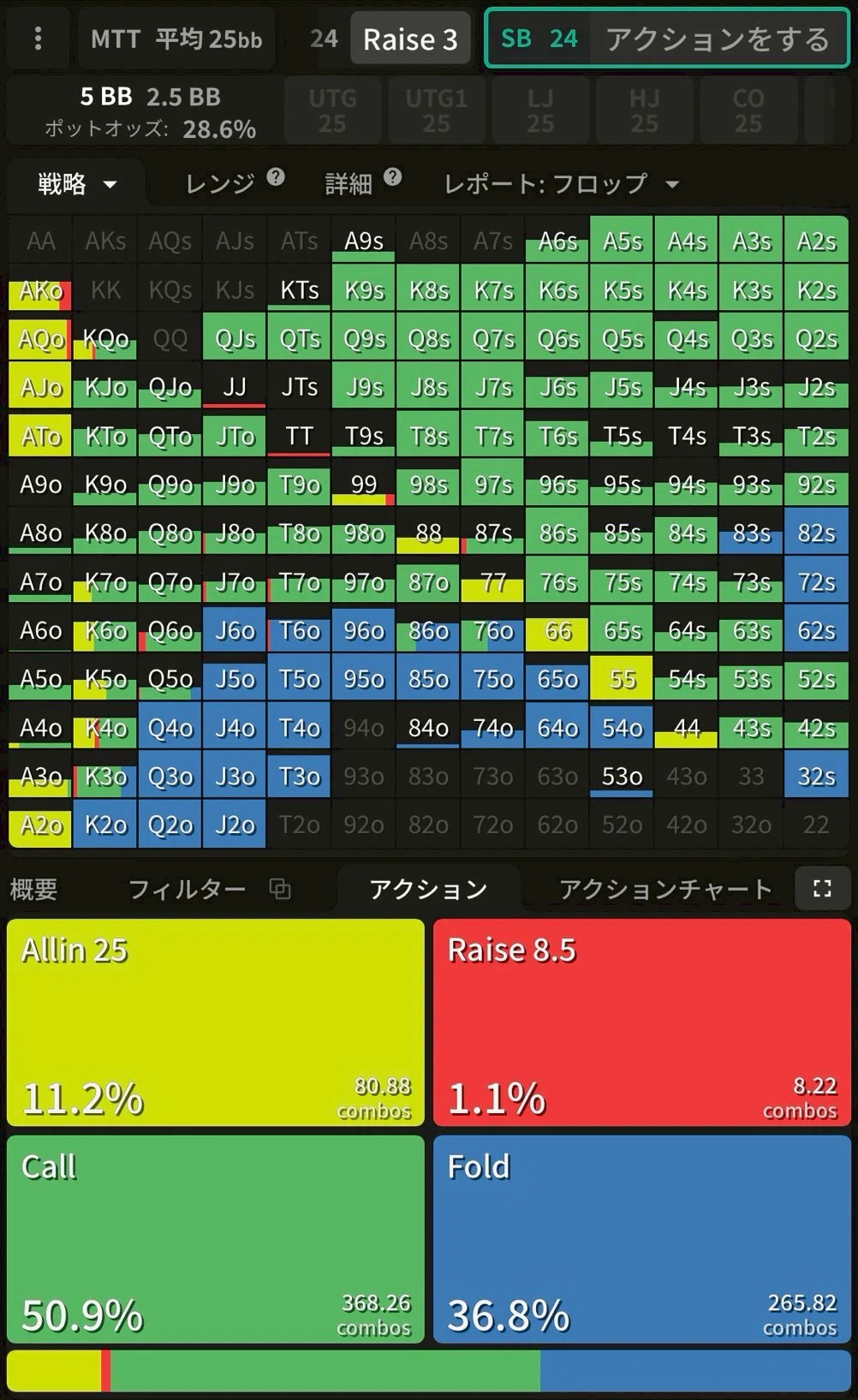
📍 The K-high range picture
- SB's call range: a wide chunk of suited Kx (K2s–K9s) carries over — that's top-pair and flush-draw fuel
- BB's raise range: K9s+ pure raise; Kxo lives in the mixed region
So on K-high flops, SB is suited-heavy and BB is offsuit-heavy. That asymmetry is exactly why the strategy here can't look like the A-high case.
C-Bet Strategy on K85 Boards
Now to the core.
Overall picture vs A-high (Vol. 6)
| A-high (Vol. 6) | K-high (this article) | |
|---|---|---|
| BB's edge | Overwhelming (SB barely has any Ax) | Modest (SB has plenty of suited Kx) |
| Default action | Range bet | ~50% bet, ~50% check |
| Main size | 29% / 45% pot | Mostly 14%, up to 45% |
| Check frequency | Near zero | ~50% |
K-high boards put BB in "slight edge" territory, so range betting goes away and the strategy becomes "bet about half the time, mostly at small size."
1. K85 Rainbow
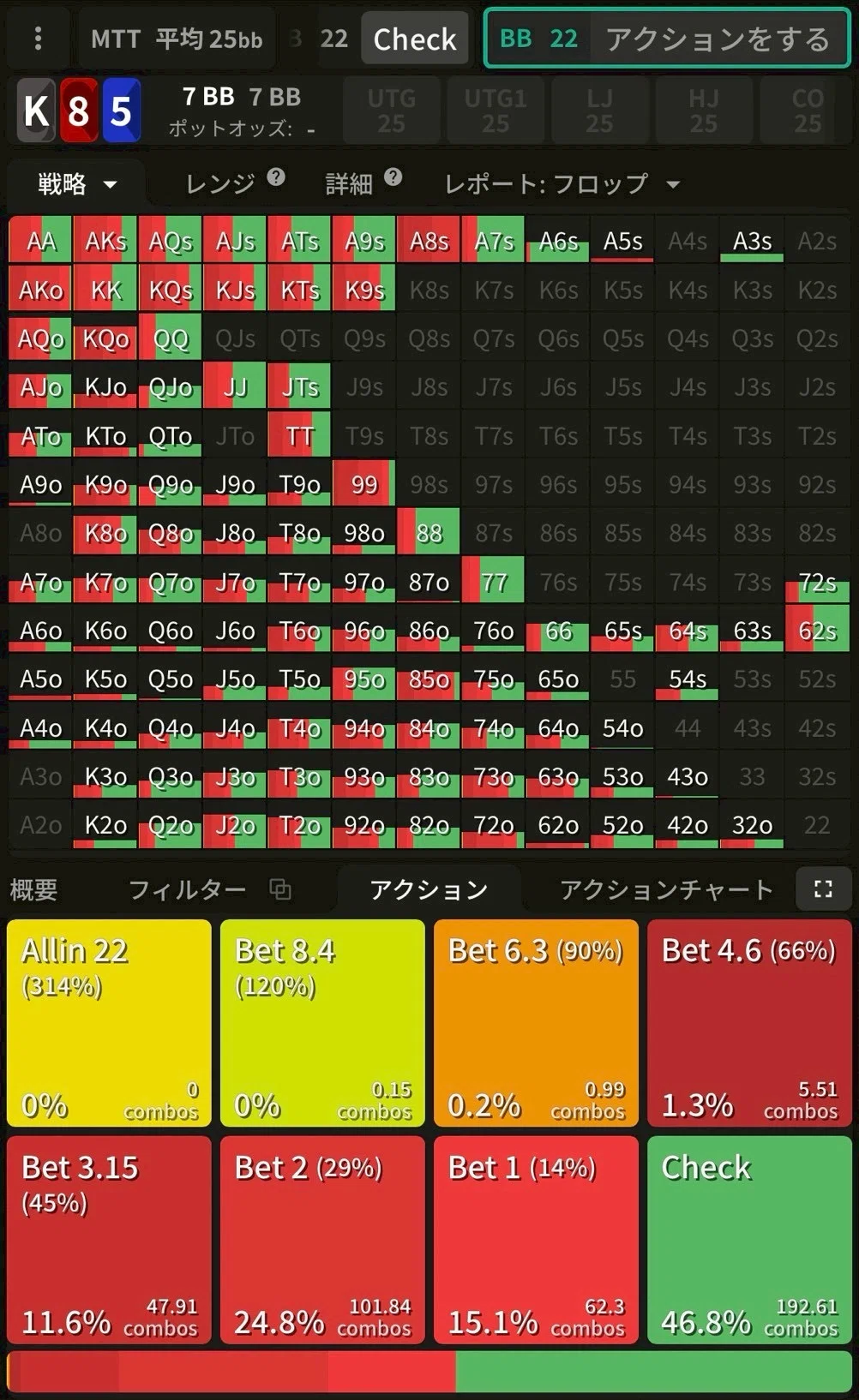
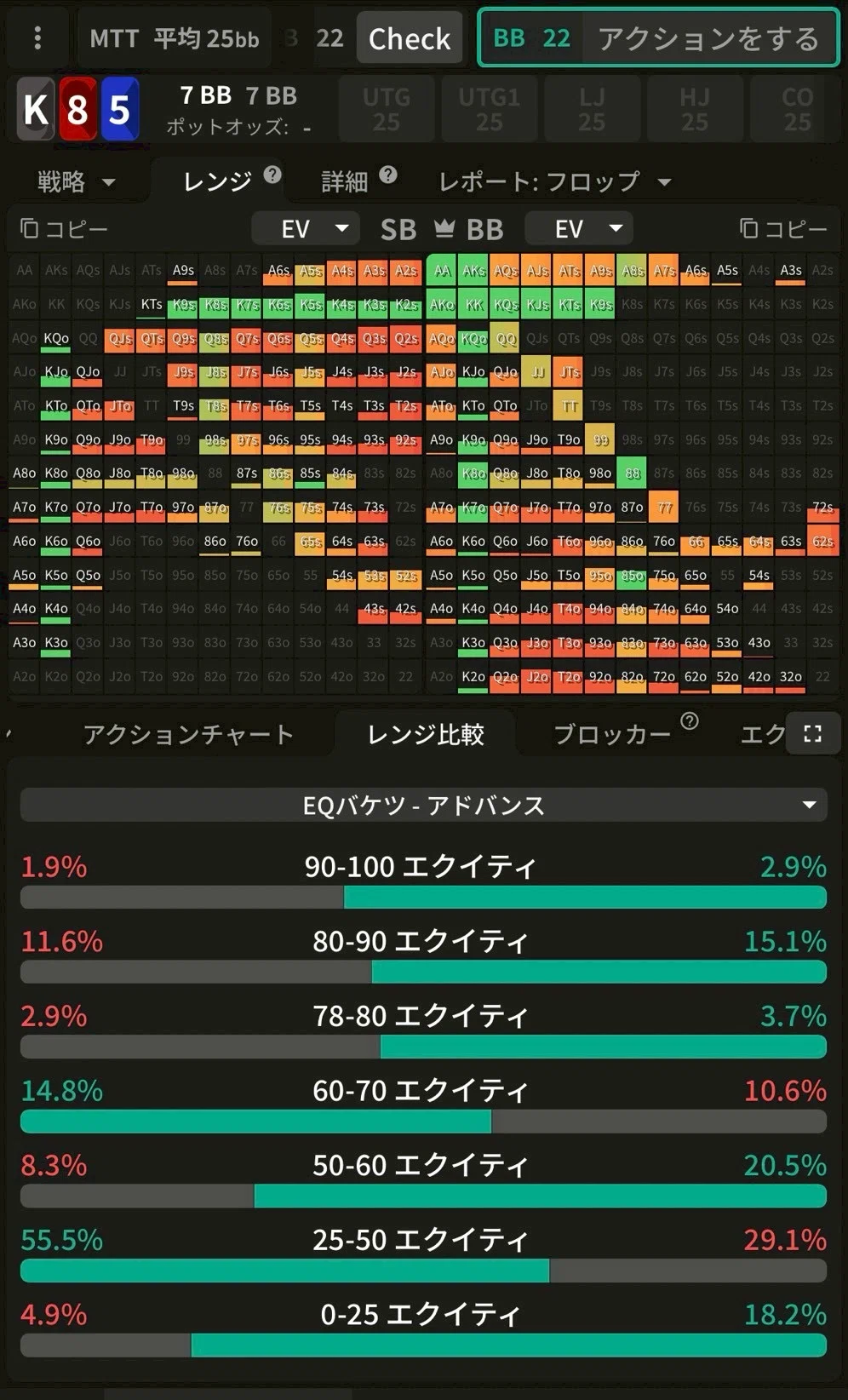
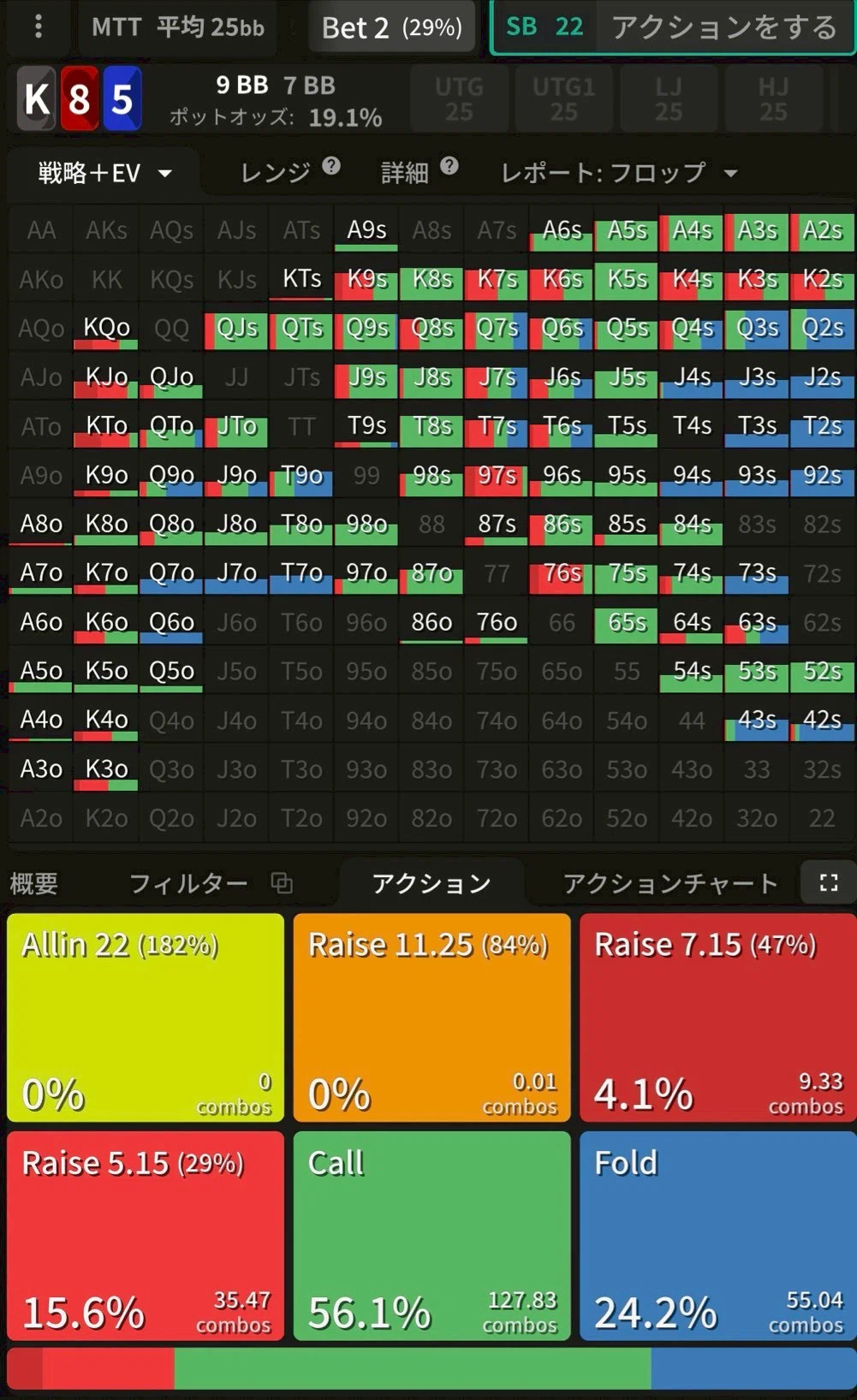
- C-bet frequency: 53%
- Sizes used: 14%–45% of pot
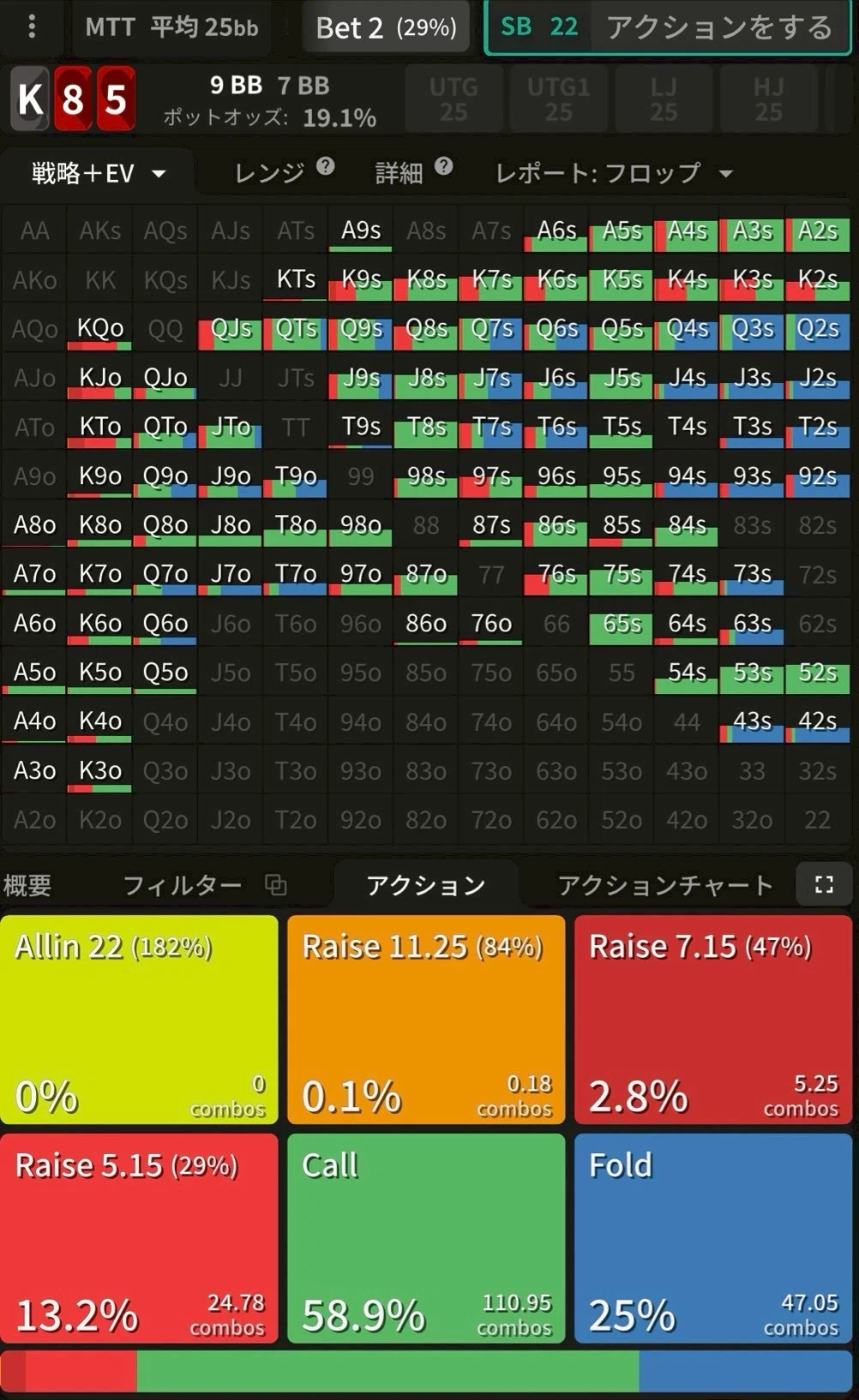
The EV view confirms what the range picture suggests: SB has a meaningful chunk of Kx combos, so unlike A-high there's no free range bet. The 14% small size is the workhorse, with 45% reserved for value/protection hands. The SB response chart shows how the call/fold/raise split moves when BB picks the 29% size.
📍 Practical: SB check-raises run light
In equilibrium SB check-raises about 20% of the time. Real opponents almost never hit that frequency, so don't slow down your c-betting out of fear of being check-raised — keep firing.
2. K85 Two-Tone
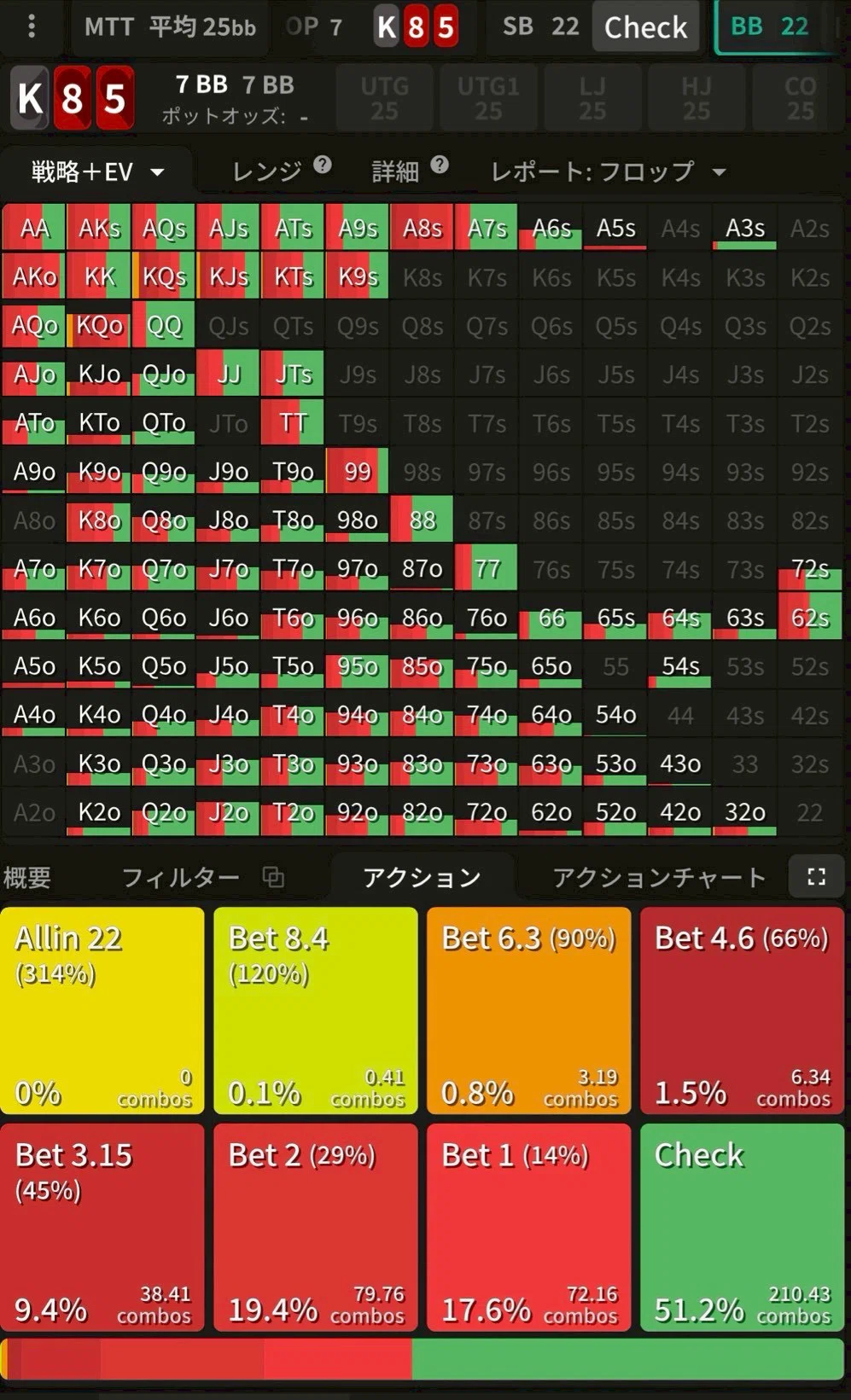
- C-bet frequency: 49%
- Main sizes: 14% and 29%
Slightly lower frequency than rainbow. Same logic as Vol. 6: SB's suited Kx becomes flush-draw fuel on the two-tone, eroding BB's edge a bit more. The SB response chart lets you see how their call / fold / raise mix shifts when BB picks the 29% size on this texture.
📌 Check-raise frequency: ~16%
Equilibrium calls for a 16% check-raise here. Again, this is under-used in practice — players who routinely check-raise on K-high two-tones are rare, so default to business-as-usual c-betting.
3. K85 Monotone
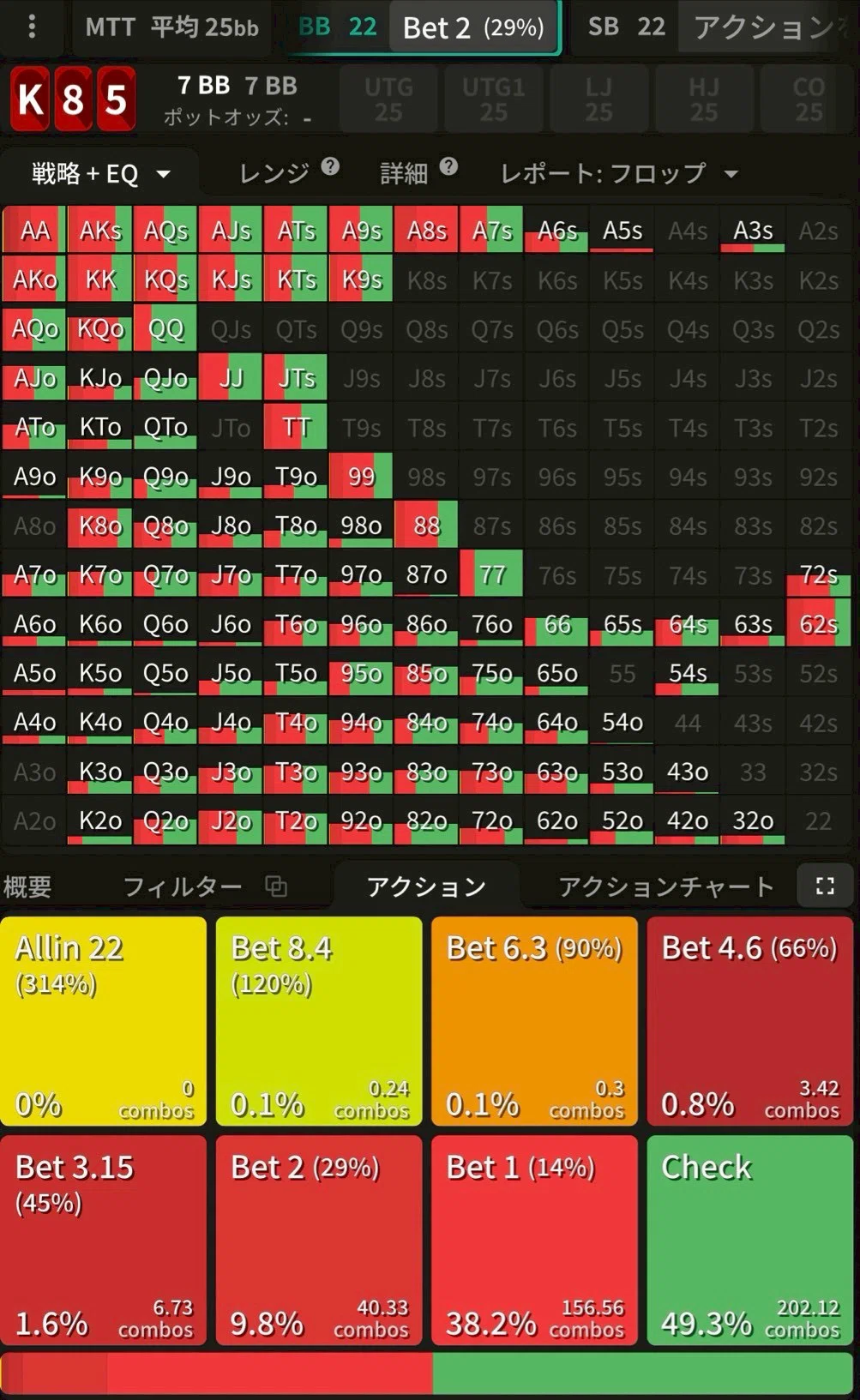
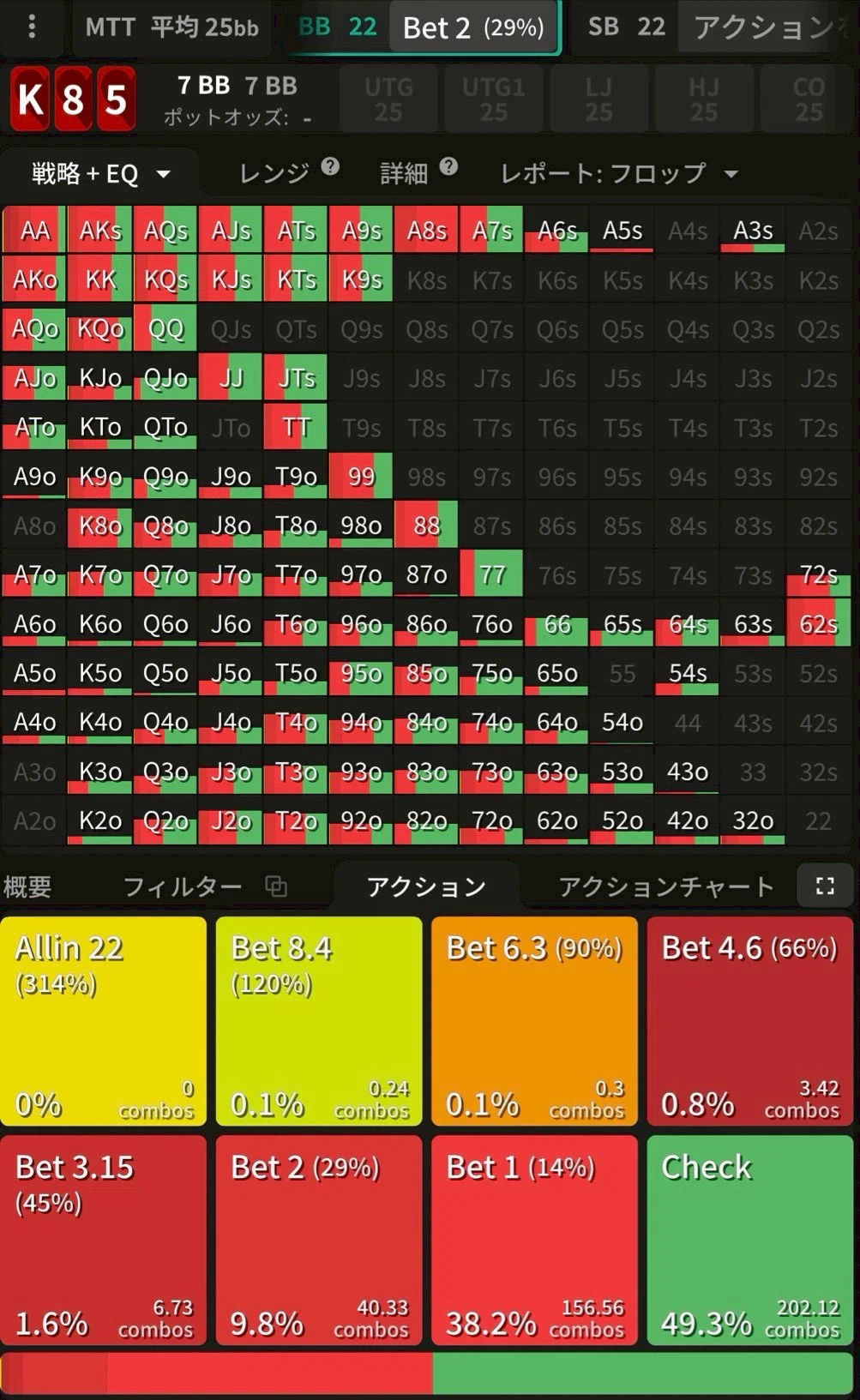
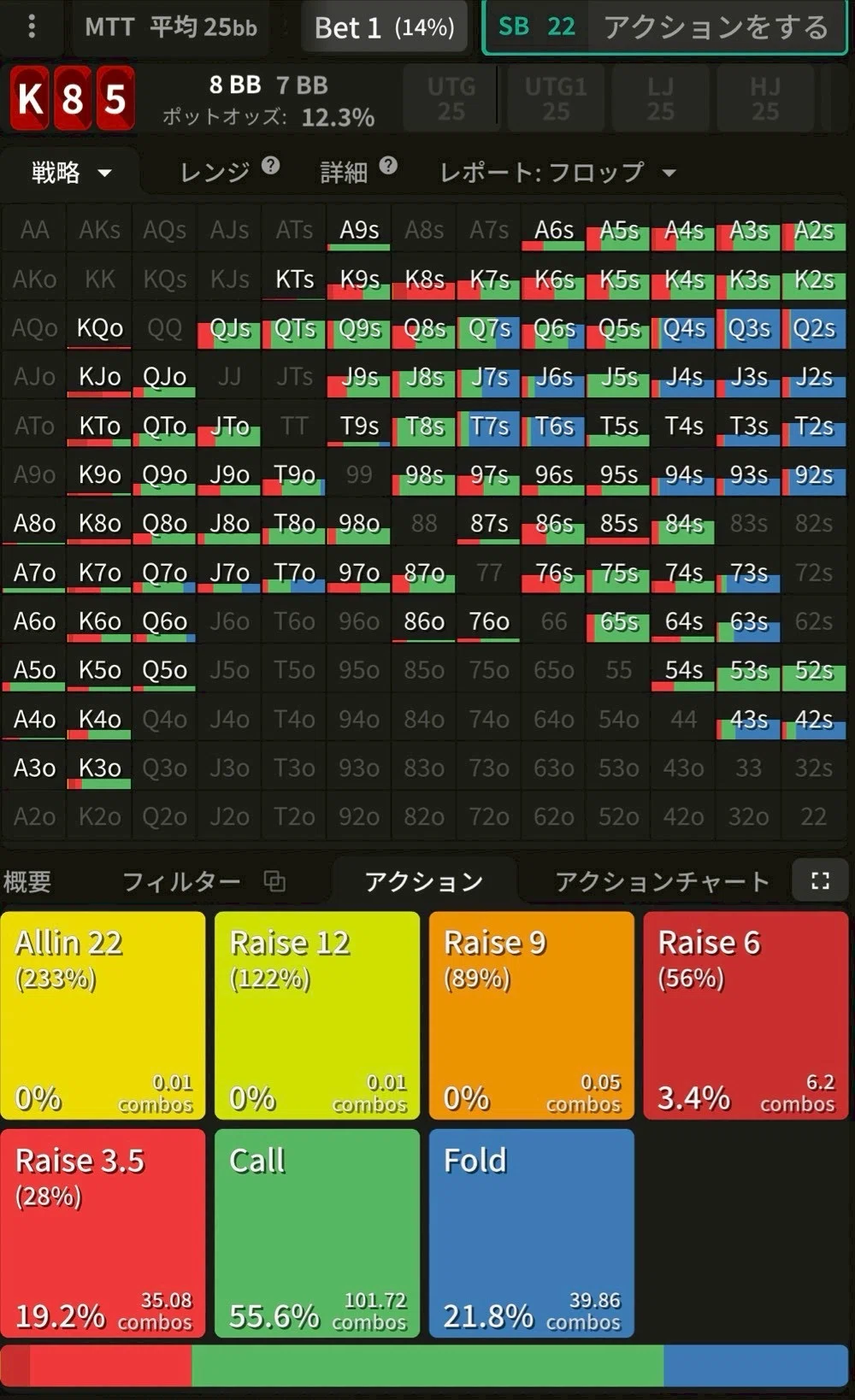
- C-bet frequency: 51% (about half the range checks)
- Main size: 14%
On the surface this looks similar to rainbow — but there's a big caveat: the 51% figure assumes SB is donking at ~43% frequency first. So in real play it splits into two branches:
- SB donks → BB plays the check-and-respond range
- SB checks → BB c-bets at about 51% (mostly at the 14% size)
The SB response chart also shows how SB defends after BB c-bets at the dominant 14% sizing.
⚠️ Monotone: SB gets to move first
On K85 monotone, equilibrium has SB donking around 43% of the time. The reason is that BB's edge gets thinned out enough — and SB carries enough flush / strong-FD equity — that SB is justified taking the lead. Most real opponents still don't donk this often, but if you do see a donk on a monotone, treat it as a signal that the board hits SB's range well rather than as a random play.
📍 Check-raise frequency: ~23% (under-used even more on monotone)
Equilibrium has SB check-raising about 23%, but monotone check-raises are basically a unicorn in real games. C-bet normally, just lean on the 14% small size rather than larger sizes to keep your risk down.
Summary
After SB limp → BB raise → SB call in blind heads-up at 25bb, K-high flops are a different game from the A-high case.
Key takeaways
- K-high is only a "slight" BB edge — SB carries enough suited Kx that there's no free range bet
- ~50% bet frequency across the K85 trio — 53% / 49% / 51% for rainbow / two-tone / monotone
- Main size is 14% — small and broad, not the 29–45% range bet from the A-high case
- Monotone presumes SB donks ~43% — surprise donks are a signal, not noise
Vol. 6 contrast (worth memorizing)
- A-high: dominant edge → range bet, 29–45% sizes
- K-high: thin edge → check half, small 14% bet for the other half
- Monotone is where the two diverge the hardest — on K-high you're often the one responding to an SB donk
Future installments will continue with c-bet strategy on paired and other board textures.
Found this helpful?
Bookmark this page to revisit anytime!
Ctrl+D (Mac: ⌘+D)
Found an error or have a question about this article? Let us know.
✉️ Contact Us
![LJ vs BB SRP C-Bet Strategy | 30bb Board-by-Board Hit Chart [Ajo MTT Vol.3]](/images/thumbnails/article-mtt-cb-lj-vs-bb-srp-30bb-en-sm.webp)
![Blind Heads-Up C-Bet Strategy on Paired Boards (Limp-Raise Line) [Ajo MTT Vol.8]](/images/thumbnails/article-mtt-blind-battle-25bb-pair-board-cb-en-sm.webp)
This article includes solution screens from GTO Wizard. Copyright in those figures belongs to GTO Wizard.