288 Hours of Poker in Las Vegas: My Dream Come True [4th MUSAPO US Internship]
A firsthand account of playing 288 hours of cash games at Las Vegas casinos over one month as a 4th-generation MUSAPO US Intern. From losing 500BB in the first five days to the three key insights that turned things around at 1-3/2-5 stakes.
📝 Originally published: This article is an English translation of a post first published on note (Seeker Start official).
Written by: Arash! ( X : link)
The Beginning
In late November 2024, I was incredibly fortunate to be selected as a 4th-generation MUSAPO US Intern, giving me the opportunity to take on cash games in Las Vegas from December 10, 2024 to January 14, 2025.
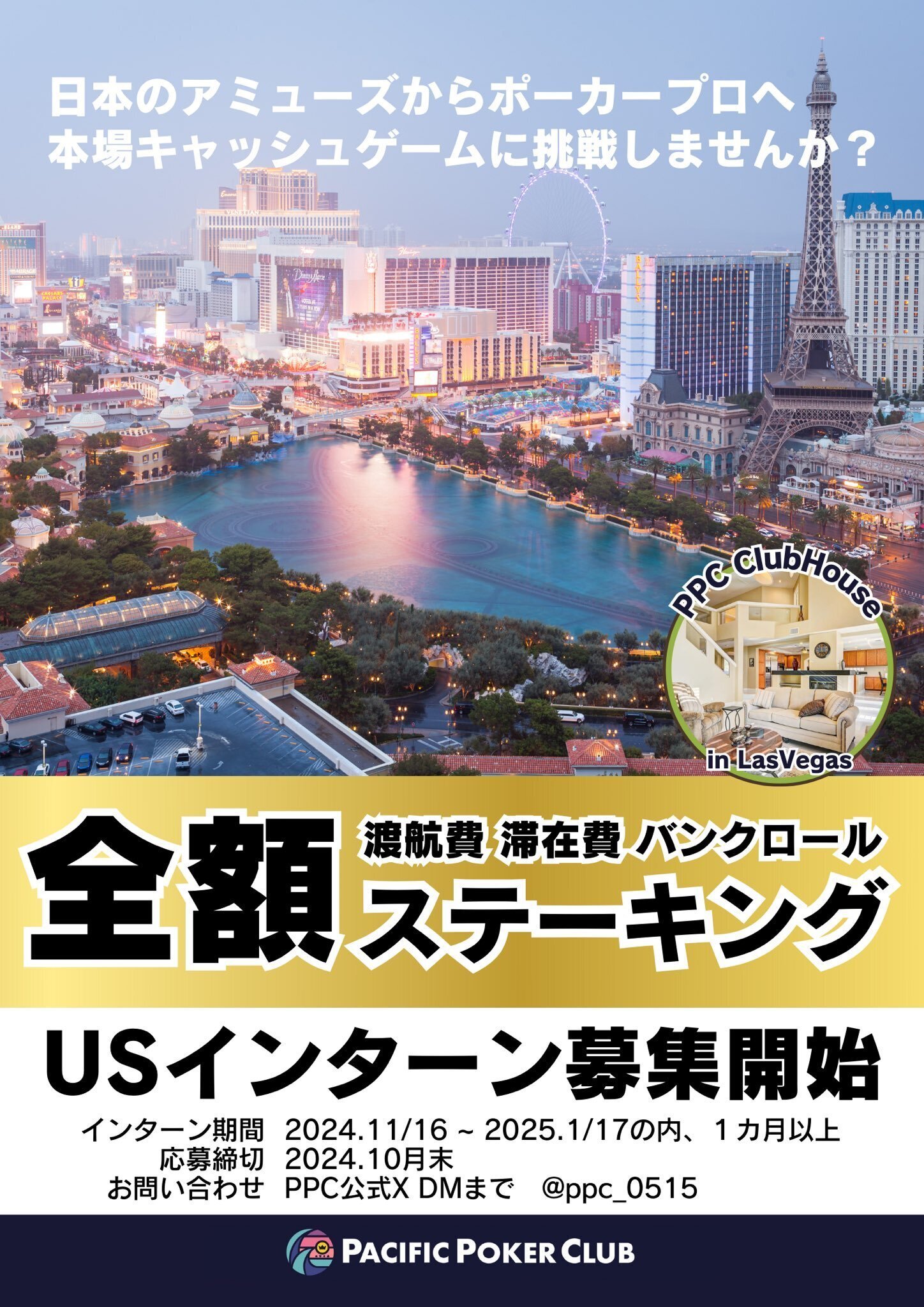
*MUSAPO US Internship is a cash game staking program run in partnership between MUSASHI POKER ROOM in Shibuya and Pacific Poker Club in Nevada, USA. For those unfamiliar, you can find details at 'PPC'.
This article is the story of a man who played a total of 288 hours of 1-3 and 2-5 No-Limit Texas Hold'em (hereafter NLH) at Las Vegas casinos over the course of one month through this staking program.
What follows is a personal account of one month as a MUSAPO US Intern. If you're only interested in the strategic content about 1-3 and 2-5 NLH in Las Vegas, please skip ahead to "What You Should Do to Win Consistently at 1-3/2-5".
Departure: Excitement and Anticipation
About three years ago, I played NLH for the first time. It was the most fun game I had ever experienced.
"I want to be involved with poker all day long."
With that thought, I could no longer focus on my work, and despite having been at my company for seven years, I quit within two months and became a dealer (freelancer).
I was 30 at the time, so to the outside world, I was just a fool. But that's how much I fell in love with poker.
Of course, I also dreamed of playing poker in Las Vegas, and I had made up my mind that if such an opportunity ever came, I would absolutely take it.
To prepare for that day, I consumed every resource I could find: the Yokosawa Poker Channel and other YouTube content, poker books, information of varying quality from the internet, and notes packed with wisdom from Amu and other experienced players.
I subscribed to GTO Wizard and founded the poker study group 'Seeker Start' to bring together people who wanted to study poker together.
I studied hard with friends and even became an official GTO Wizard ambassador.
Through all these activities, the chance to take on Las Vegas finally came through the MUSAPO US Internship staking program.
I couldn't claim to be Japan's top player, but through my studies I was confident that I understood poker better than most. "There's no way I'll lose in Vegas" -- that's what I thought as I left Japan in high spirits.
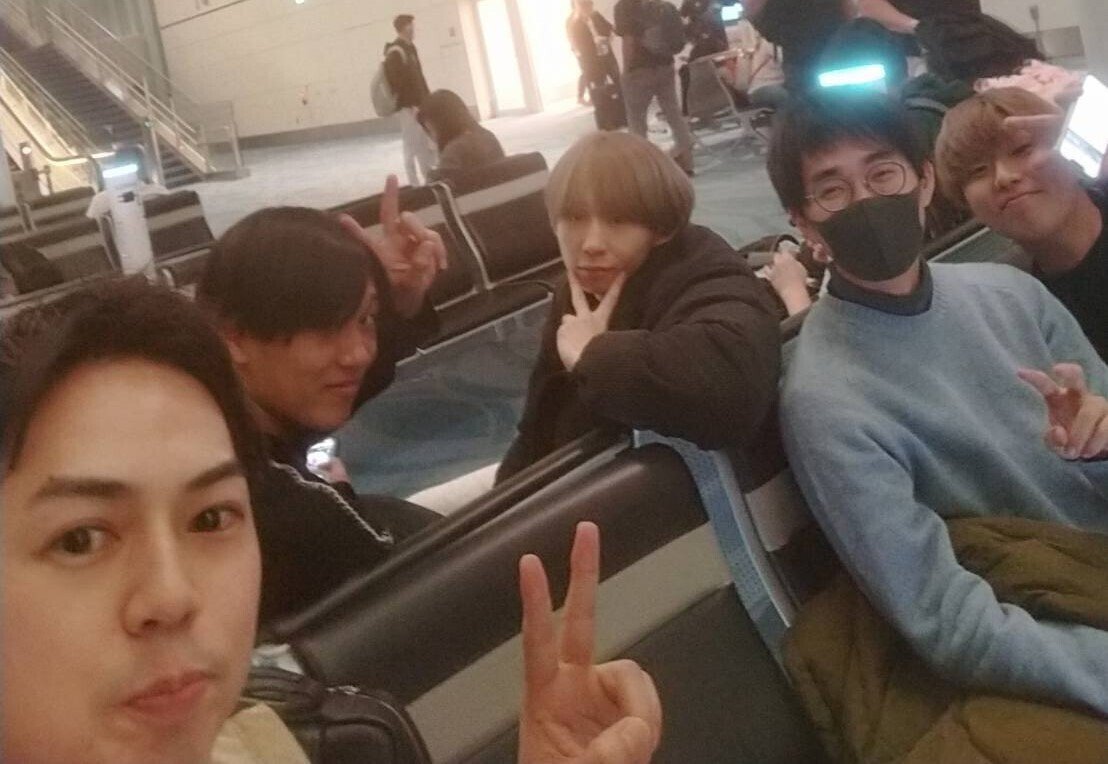
Before departure, all I could think about was how much I'd win, what I'd spend the winnings on, and how high I could climb in stakes.
On the plane, the anime "Kaiji" opening theme "The Future Is in Our Hands" by THE BLUE HEARTS kept playing in my head.
"The future is in our hands~♪" "We weren't born to lose~♪" -- that was the vibe.
Arrival: Lack of Skill, or Bad Karma?
After about 7 hours to Hawaii, then another 6 hours, we headed for Las Vegas. Three of us got pulled into a separate room at Hawaiian immigration, but we all managed to arrive in Las Vegas safely.
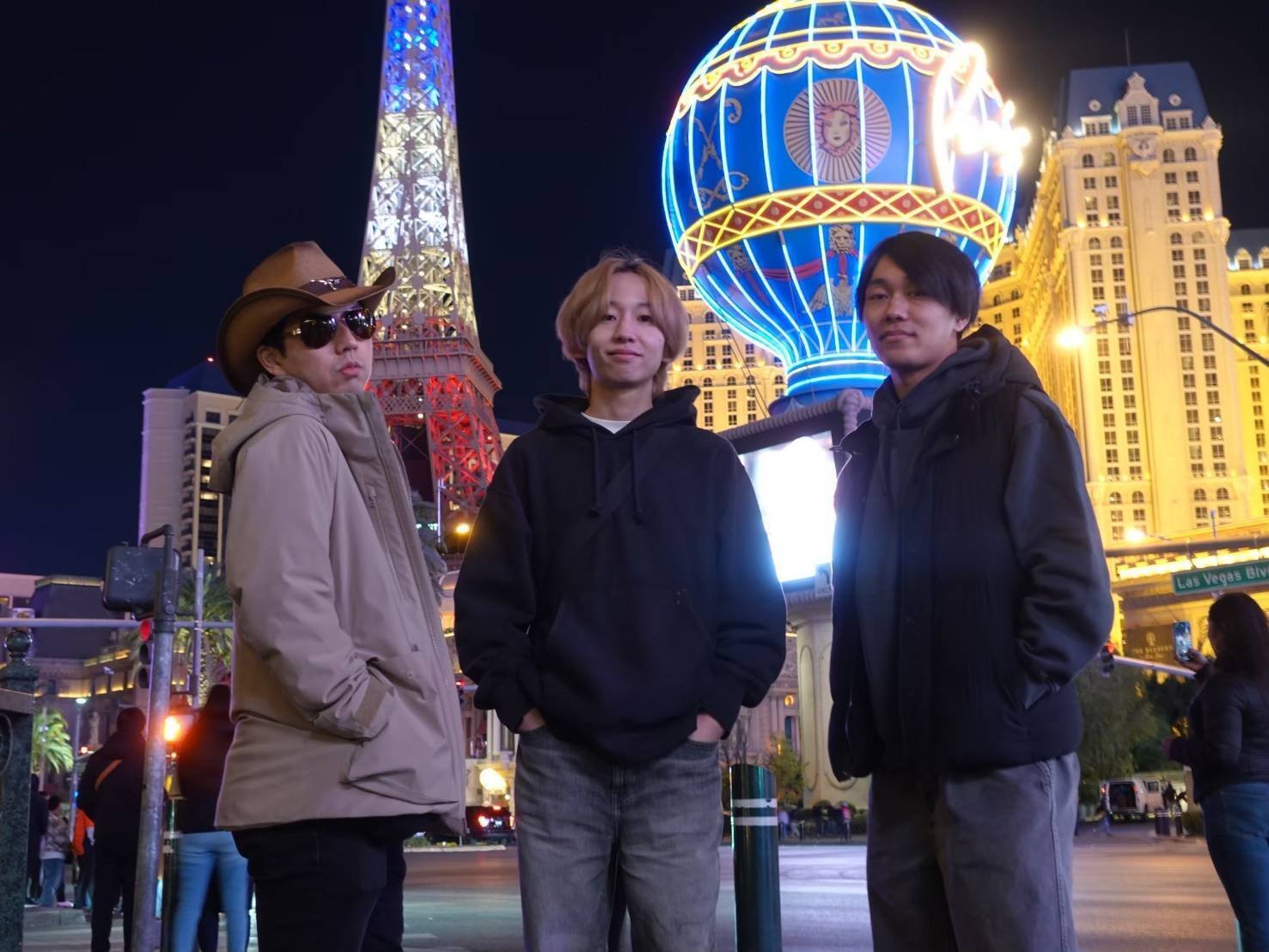
PPC staff picked us up at the airport, and we took a short walk down the Las Vegas Strip to take some commemorative photos.
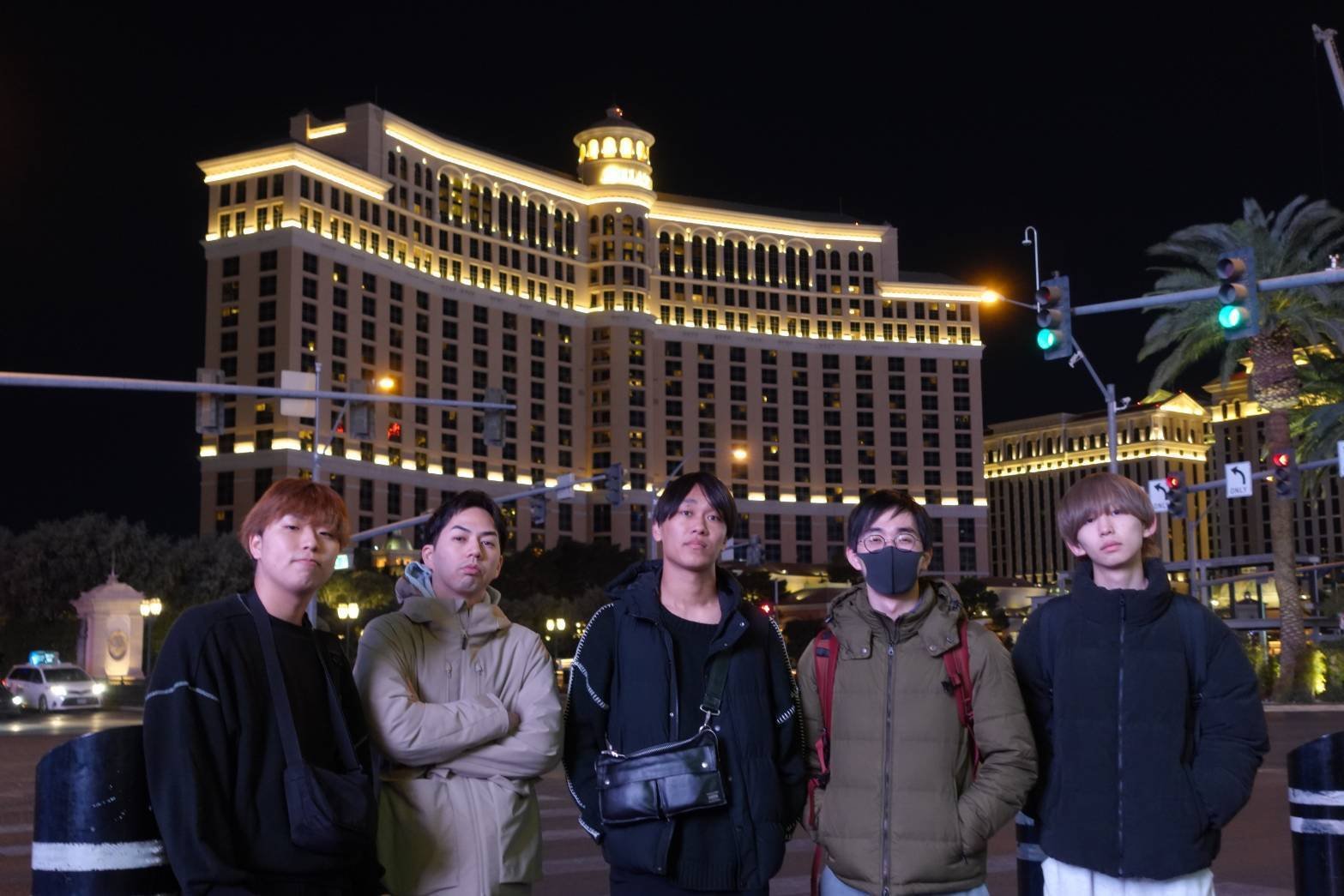
After breathing in the Las Vegas air, we hurried back to the PPC House to fight our jet lag.
The PPC House was like a secret hideout where the 4th-generation US Interns lived together.
It was a spacious, beautiful mansion with a pool. Exhausted from the trip, we all slept like the dead on the first day.
On the morning of the second day, we were summoned to the PPC House living room and each handed $1,500. This was our bankroll.
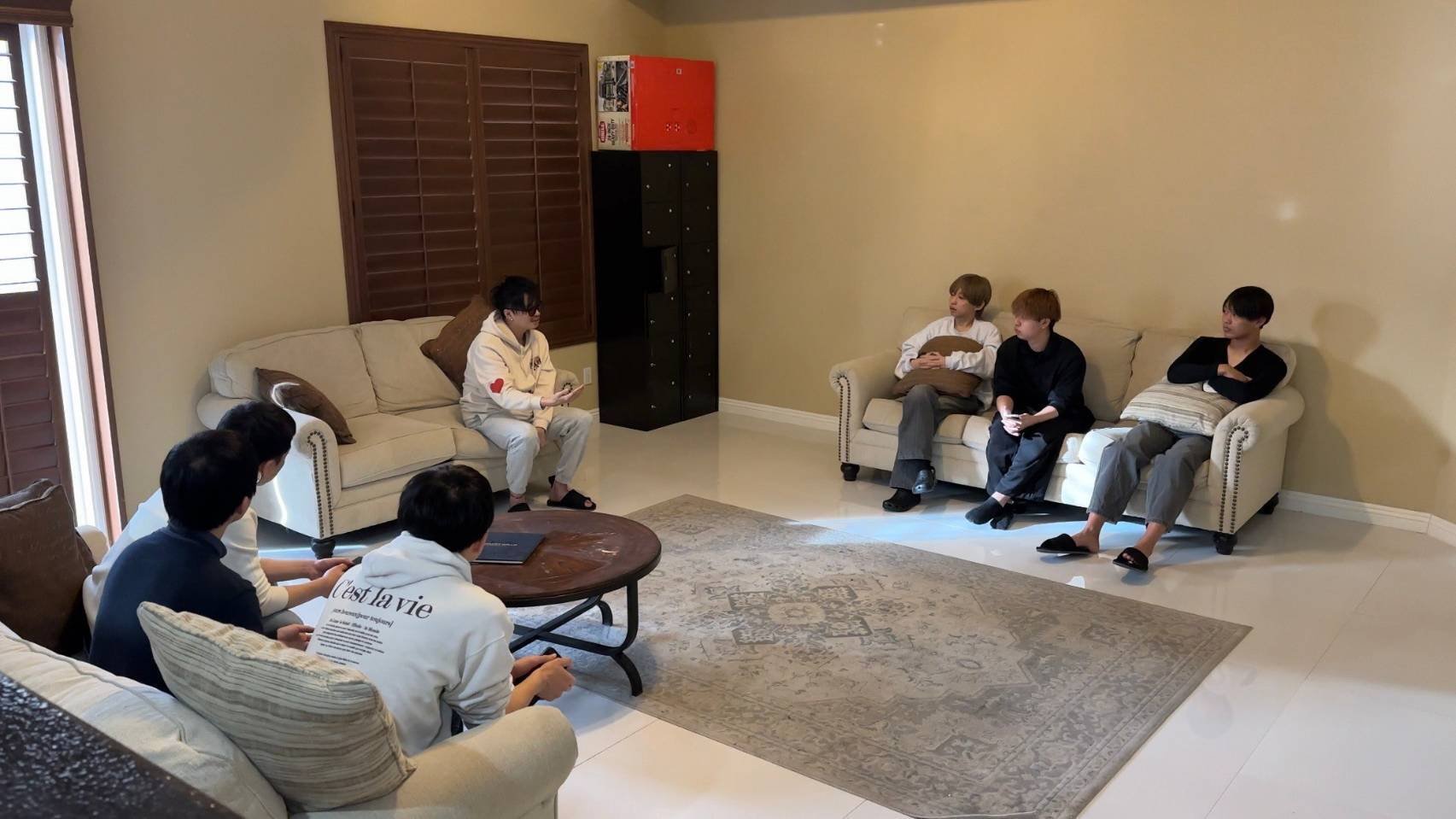
On the first day we'd be playing 1-3, and everyone chose which poker room they wanted to go to. I had no idea what poker rooms existed, so I chose the Bellagio based solely on hearing it was Yokosawa's home room.
Since I couldn't speak English, PPC staff called in to put me on the waiting list. After a 15-minute drive, we arrived at the Bellagio.
I entered the casino, fumbled through creating a player's card in broken English, and headed to the poker room.
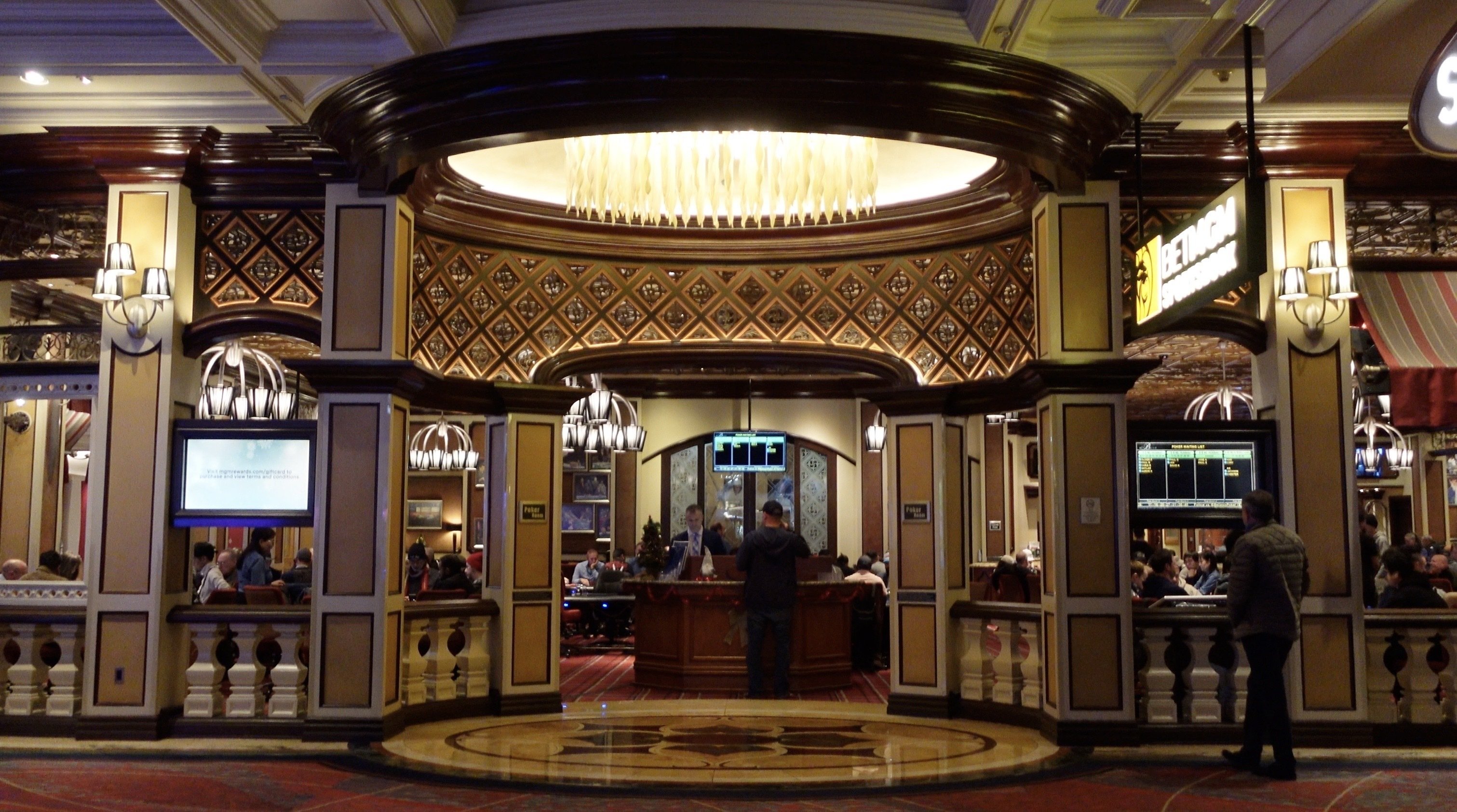
When I arrived at the poker room, I checked the waiting list. There it was: 'ARASHI.' It finally hit me that I was about to play poker at a Las Vegas casino.
Since the waiting list had been called in by phone, I needed to check in at the front desk.
ARASHI: "Herro, ai, wanna, check-in."
ARASHI: "I'm, Arashi."
Front desk: "?"
Front desk: "(rapid-fire string of incomprehensible English)"
Front desk: "What your name?"
ARASHI: "Arashi, A-R-A-S-H-I, Arashi"
Front desk: "OK, ~~~~~ call you later"
ARASHI: "OK, thank you."
I was bombarded with English words at a relentless pace, but I truly understood nothing. I wish they'd spoken a little slower.
The only things I managed to catch were "What's your name?" and "We'll call you later" -- but of course I put on a face of complete understanding when I thanked them.
Naturally, I also gave my fellow US Interns the "I handled that check-in perfectly" face.
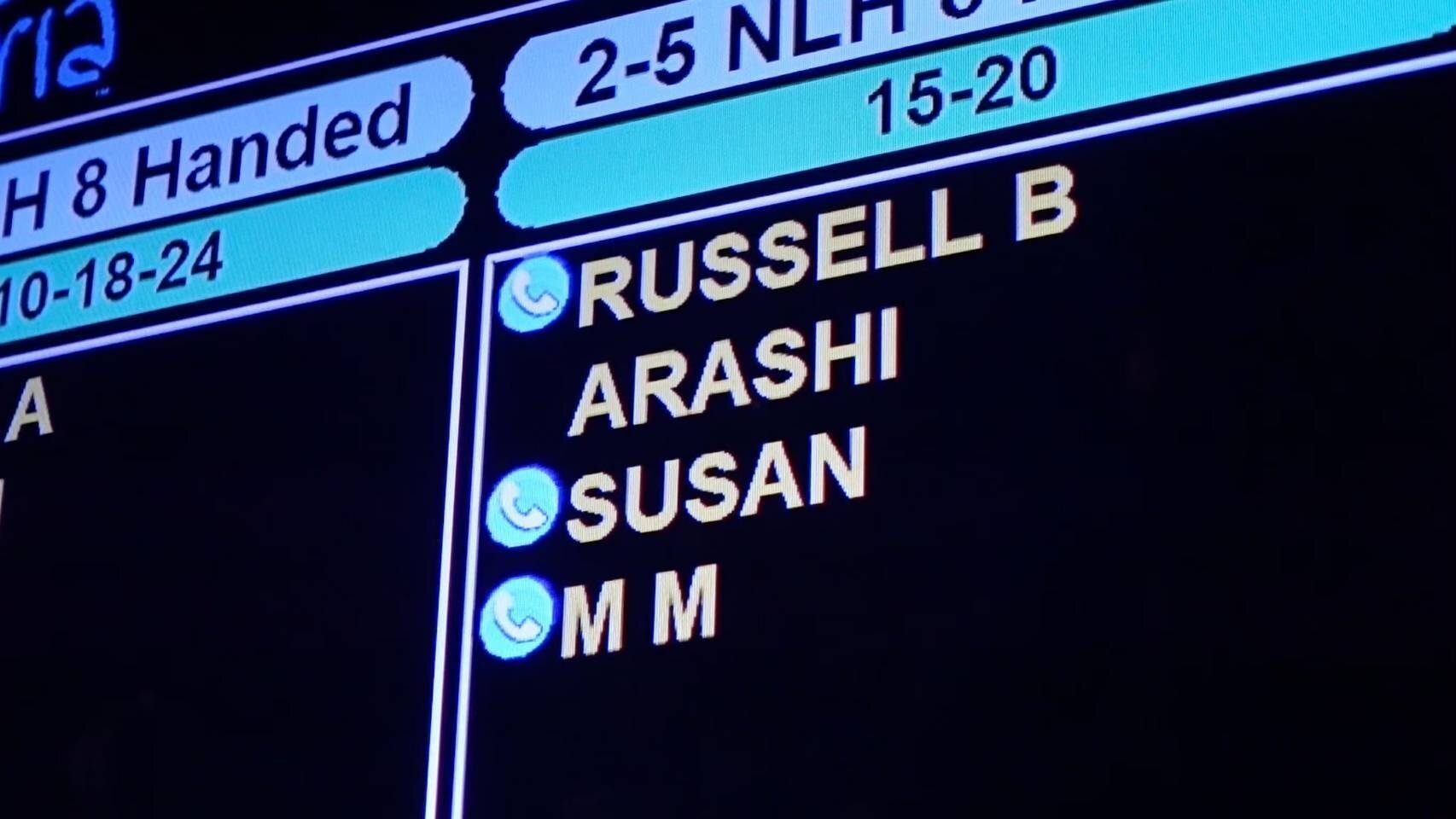
After waiting a few minutes, an announcement came over the speakers.
It was in English, of course, so I couldn't understand it. But what I heard in my head was: "ARASH! from Japan, waiting for 1-3 NLH -- your stage for an opening-day victory is ready, so please come to the front desk immediately." That's what it sounded like to me.
When I went to the front desk, they told me "We have a seat for you at Table 8."
It goes without saying that it took me at least three attempts to understand that Table 8 was my assigned seat.
I exchanged $300, the max buy-in, for chips at the cashier and headed to the table.
I sat down, pulled out the player's card I'd just made, and handed it to the dealer.
My very first hand was T3o, which I naturally folded -- and just like that, I'd unlocked the "played cash games in Las Vegas" achievement.
All I did was fold, yet I felt an indescribable sense of accomplishment.
After continuing to fold for a while, I was dealt AKo in the HJ.
Hand 1
Bellagio 1-3 NLH 9-max
Hero: A♦K♠
- Preflop -
UTG limp / call
HJ (hero) raise 15
CO call
BTN call
- Flop T♦5♠3♣ (pot 64) -
UTG check / fold
HJ (hero) check / fold
CO check / fold
BTN bet 70
BTN shows A♣5♦
The old guy on the BTN turned to me with the biggest smile and said, "I had best hand. maybe..."
This was English I could actually understand -- a sentence at my comprehension level -- but I couldn't understand why this guy thought that way.
From this hand, I instantly realized that the poker being played in casinos was nothing like the clean, textbook poker I'd studied.
And so, having only studied theory without gaining real combat experience, I lost spectacularly over the first five days.
5-day results: -$1,641 (-547BB)
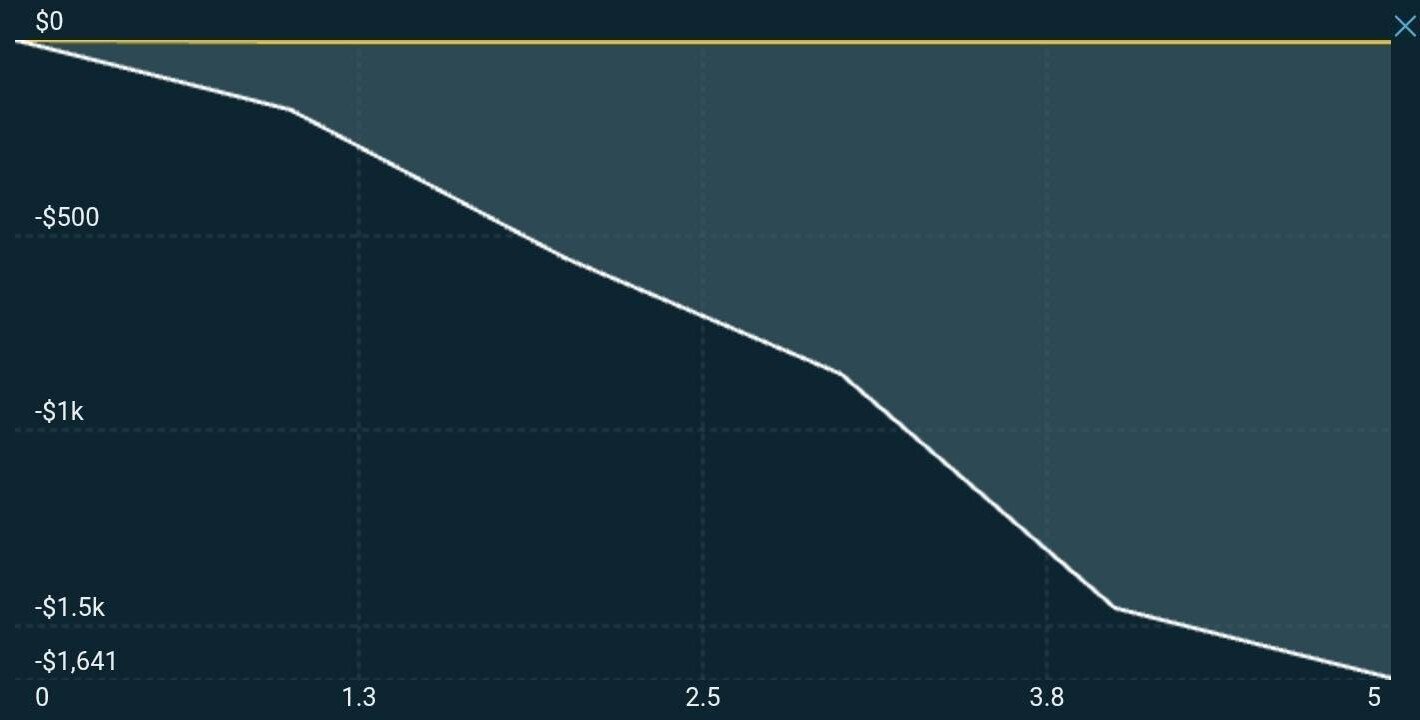
"Las Vegas, the gambling capital... Did I really think I'd soar just by breathing its air?"
My poker coach back in Japan: "Somebody teach ARASH! the fundamentals!"
Courage: Playing Poker with Other People's Money
After the fifth day's session, I returned to the PPC House. Naturally, I had the worst results among all 4th-generation MUSAPO US Interns.
While eating dinner feeling dejected, the staking backer hit me with a brutal line.
"Arashi, are you still planning to play poker?"
Like a heart-pounding multiple-choice question where silence seemed like the only answer... But I fought the atmosphere and immediately blurted out, "Please give me at least one more week!"
"I'm just kidding! Keep at it!" he replied.
Still, I completely understood that if I were the one funding this, I wouldn't want to keep backing someone who was losing.
In the MUSAPO US Internship, there's a system where you send your played hands to Discord and receive hand reviews from past winning interns. (Those interested can check it out below.)
I'd been sending my hands to Discord, and the review feedback was "there aren't any really bad plays." (Doesn't that also mean there aren't any good plays? -- but I didn't say that.)
They said if I kept playing this way, results would improve, but I felt there had to be some reason I was losing, so I reconsidered.
Looking back through my hand history, I noticed something.
I was barely bluffing. Actually, I wasn't bluffing at all.
During the MUSAPO US Internship, there's a rule that you must report your hourly results to Discord while playing.
Because I didn't want to send losing results to Discord, I spent the entire time at the table thinking "I don't want to lose any chips."
The pressure of losing someone else's money
The discomfort of publicly sharing losses
Being forced to confront the losses with every update
These three factors gnawed at my mental game every time I sent an update.
The honest
When you're thinking "I don't want to lose their money," you can't make bold plays.
Perhaps because of this mental state, I had barely bluffed throughout the trip, and correspondingly, I wasn't getting called on my value bets. (Also, I think to foreigners, I just have a "value bet" face.)
In reality, I had been consciously reducing bluffs because the games were so multiway and I figured opponents would overcall.
But maybe I was just making excuses and simply couldn't muster the courage to bluff.
Looking at individual hand EV, bluffing less might be fine, but in poker as a repeated game, under-bluffing may not be good.
Or perhaps I was letting fear blind me to situations where bluff EV was positive.
Reflecting on my hands, I was reminded once again that playing poker based on emotions is truly harmful.
Tomorrow, I'll have the courage to win pots with bluffs. (I'll play the way I've studied.)
Maybe bad luck was a factor, but after losing this much, something had to change.
With that small sense of resolve, I got into bed.
Awakening: The Path to Victory
Actually, starting from day 4, I'd stopped going to the Bellagio and moved to a casino called the Venetian.
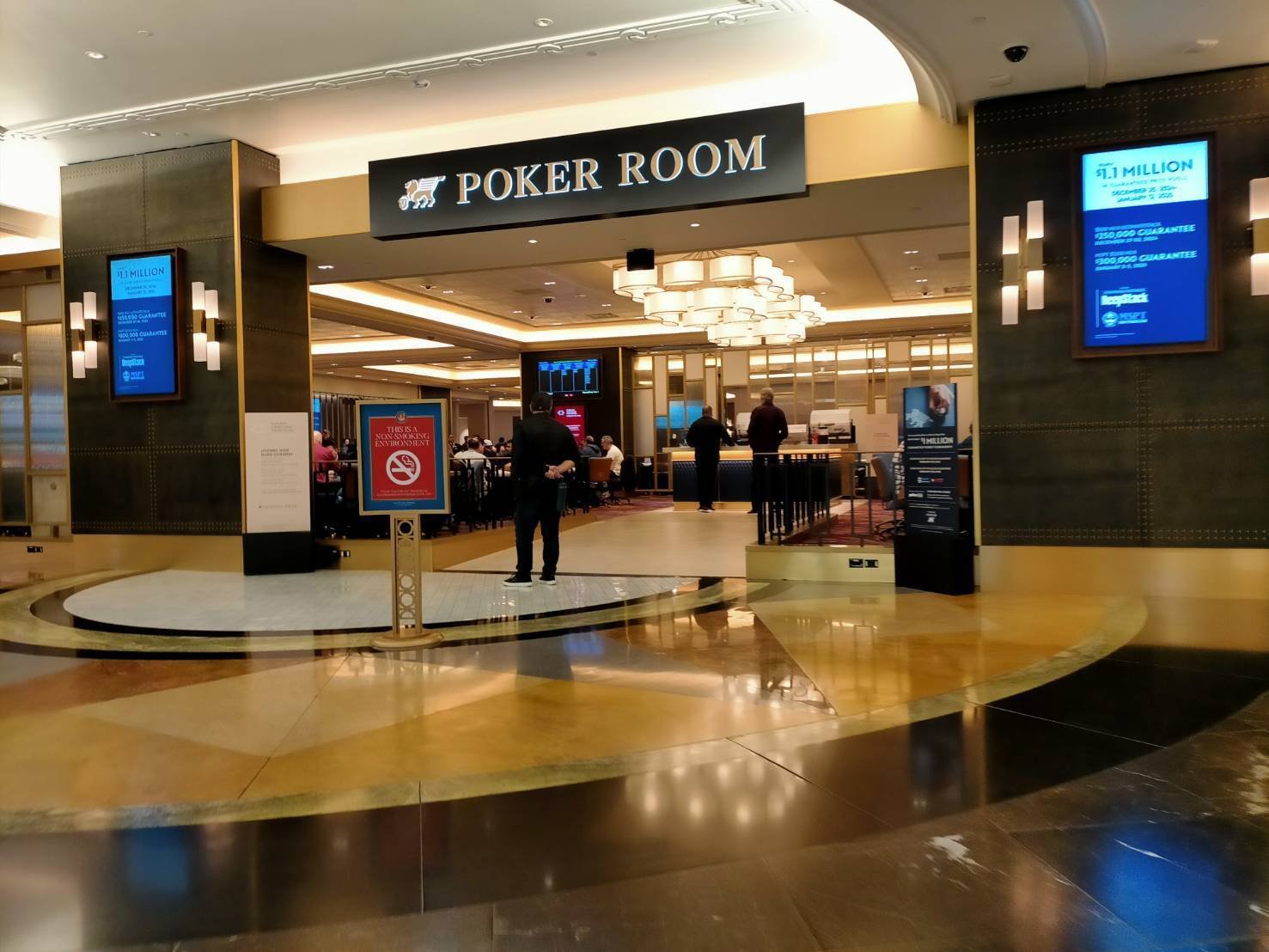
The Venetian has a unique setup: every time the dealer changes, they run a DBBPPLO (Double Board Bomb Pot Omaha), and every 30 minutes there's a jackpot for whoever makes the strongest hand.
Perhaps because of these unique features, the preflop play was looser than at other casinos, with players saying things like "just this once" as they called (though that happens everywhere). The players had a stronger gambling spirit overall.
Then came a hand that gave me a breakthrough insight.
Hand 2
Venetian 1-3 NLH 8-max
Hero: K♦Q♦
- Preflop -
UTG raise 15 / call
+1 call / fold
BTN (hero) raise 60
- Flop J♠T♠2♣ (pot 139) -
UTG check
BTN (hero) check
- Turn J♠T♠2♣5♠ (pot 139) -
UTG check
BTN (hero) check
- River J♠T♠2♣5♠4♠ (pot 139) -
UTG check / fold
BTN (hero) bet 210
UTG shows 6♠6♣
This river bluff is perhaps relatively standard. But until now, I had never done it.
I had truly been playing under bluff -- no, never bluff.
In previous sessions, I had recognized situations where my opponent's turn and river checks indicated they didn't have a strong flush.
But I'd been too timid to bluff, fearing that even their hit hands would overcall.
This time, by making the bluff bet size somewhat extreme, I figured their hit hands wouldn't call. That was my reasoning.
In other words: they don't have strong hands left, so if I bet big, they'll fold. Simple as that.
And indeed, my opponent tanked briefly before folding a 6-high flush. I was shocked that an even stronger hand than expected had folded.
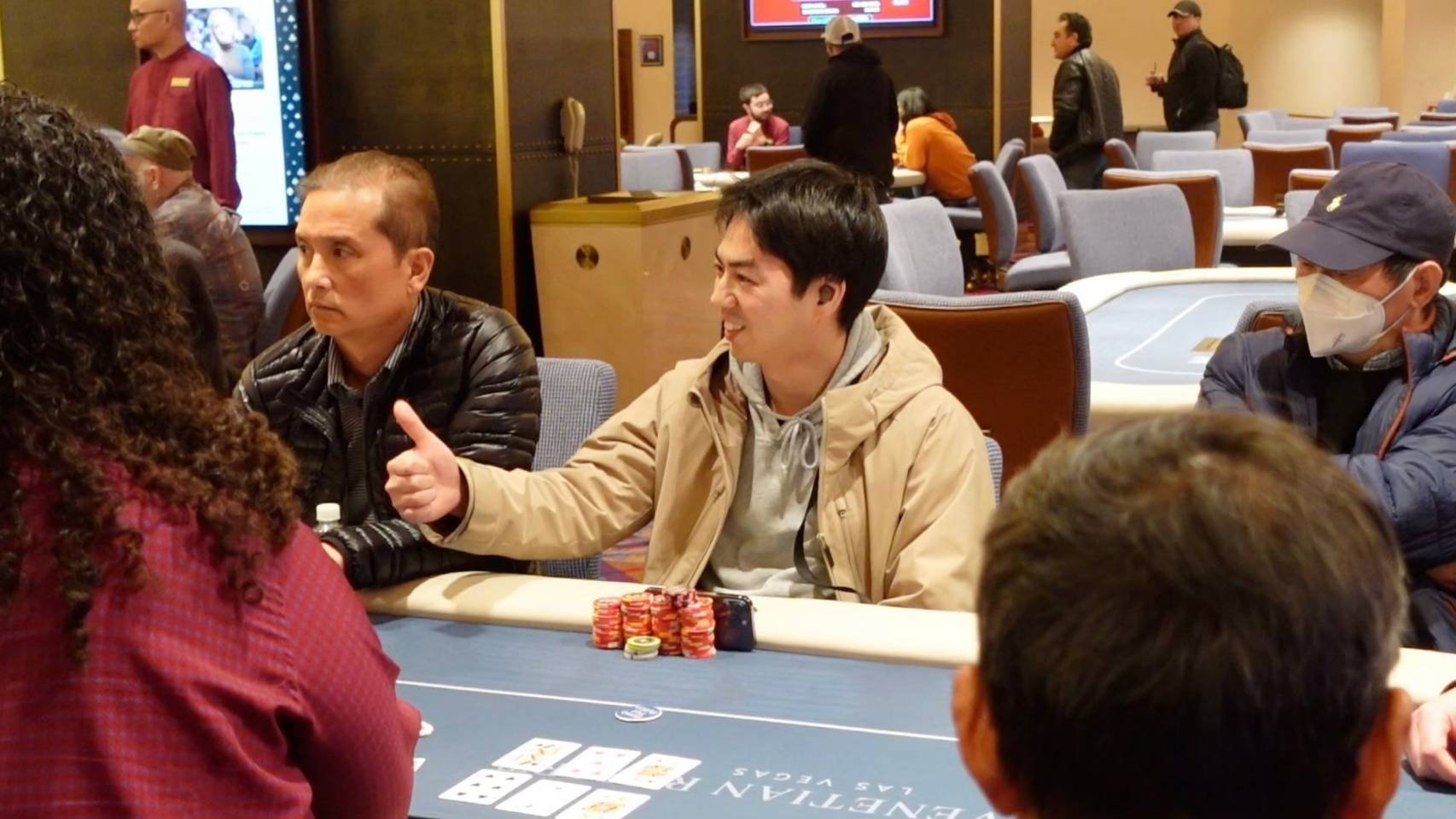
I learned three things from this hand.
Even overcalling opponents are less likely to overcall on obvious boards
Large river bets can induce overfolds
These players often estimate hand strength based on bet sizing
I definitely have a value-bet face
By "obvious boards," I mean one-card straight boards and one-card flush boards.
In situations where strong hands are easy to imagine, even overcalling players will consider folding to large bets, even when holding relatively strong hands.
After realizing this, whenever I believed my opponent's range was capped, I repeatedly bluffed with pot-sized bets.
Of course, my bluffs got caught plenty of times, but my results kept improving.
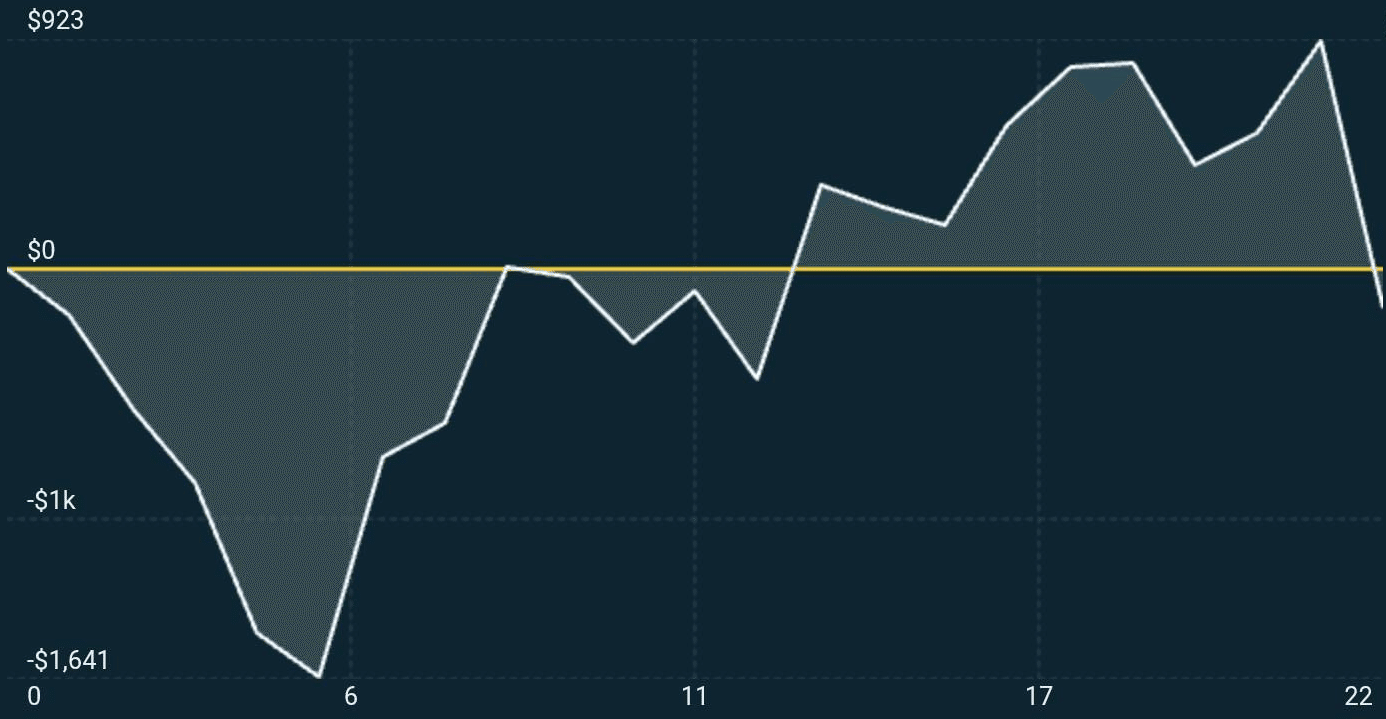
I recovered the debt from those first five days within a few days, and by year-end I was up to +$923 (+307BB).
On the last day of the year, I lost a 250BB preflop all-in with KK vs JJ vs AQs, sending me back underground. But since AA and KK had gone 2-for-14 during this period, being roughly even felt like a major accomplishment. (My karma must be terrible.)
Taking Flight: The 2-5 Challenge
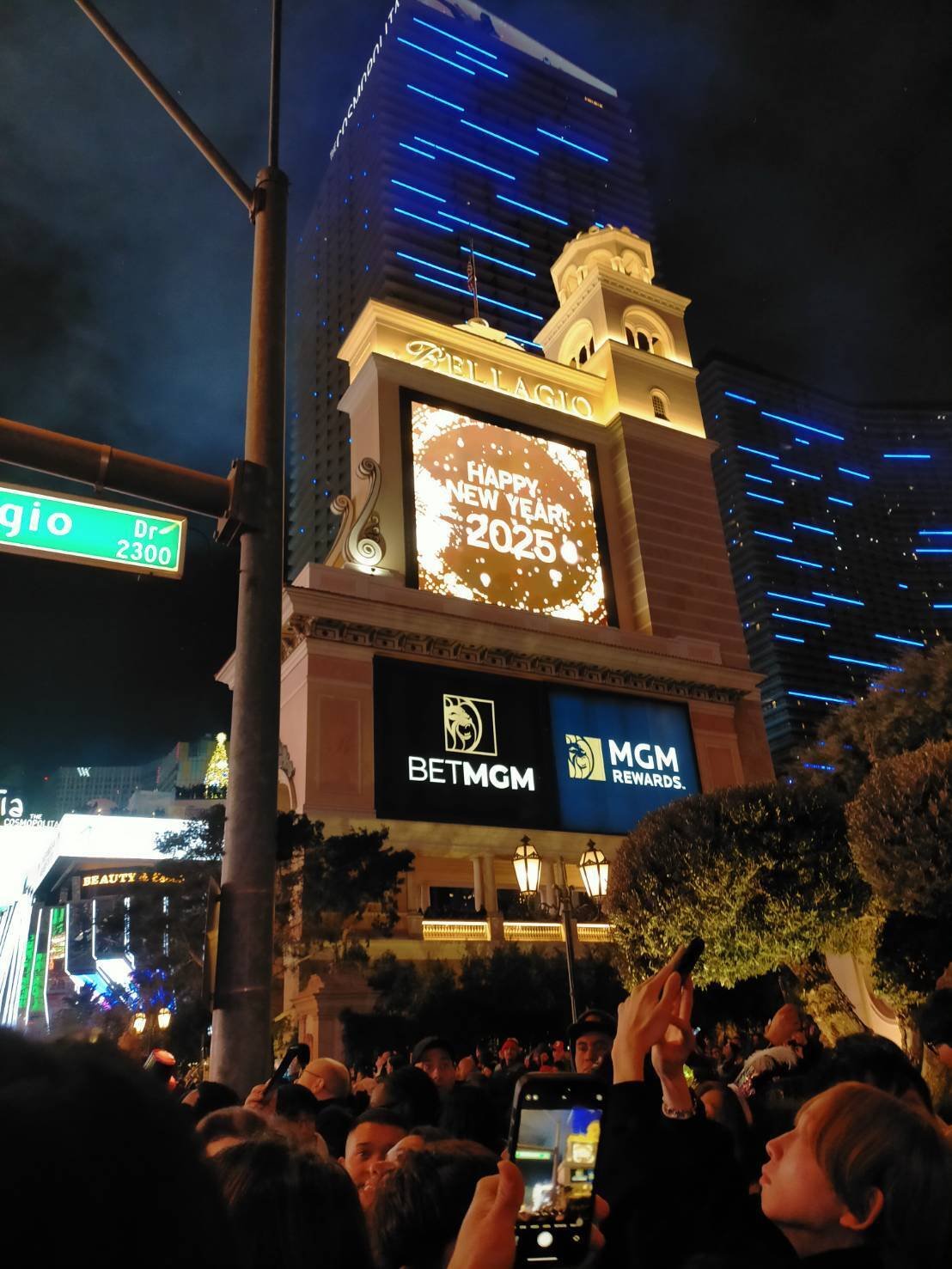
We spent the New Year's Eve moment watching fireworks by the Bellagio fountains, and I decided to take my first day off of the trip on New Year's Day.
I'd been grinding for about 20 days straight since arriving in Las Vegas, so both my body and mind were exhausted. I reached out to people who'd helped me the previous year and spent a full day resting at the PPC House.
On January 2nd, the first session of the new year, perhaps thanks to the rest, I hit my best result of the trip: +572BB.
With this result, I earned the right to move up to 2-5.
When you're winning, good luck just keeps coming, so I realized that patience -- keeping losses down while continuing to grind -- is also important.
My first 2-5 session was at a casino called Aria. Its poker room had the same design as a certain poker room in Shibuya.
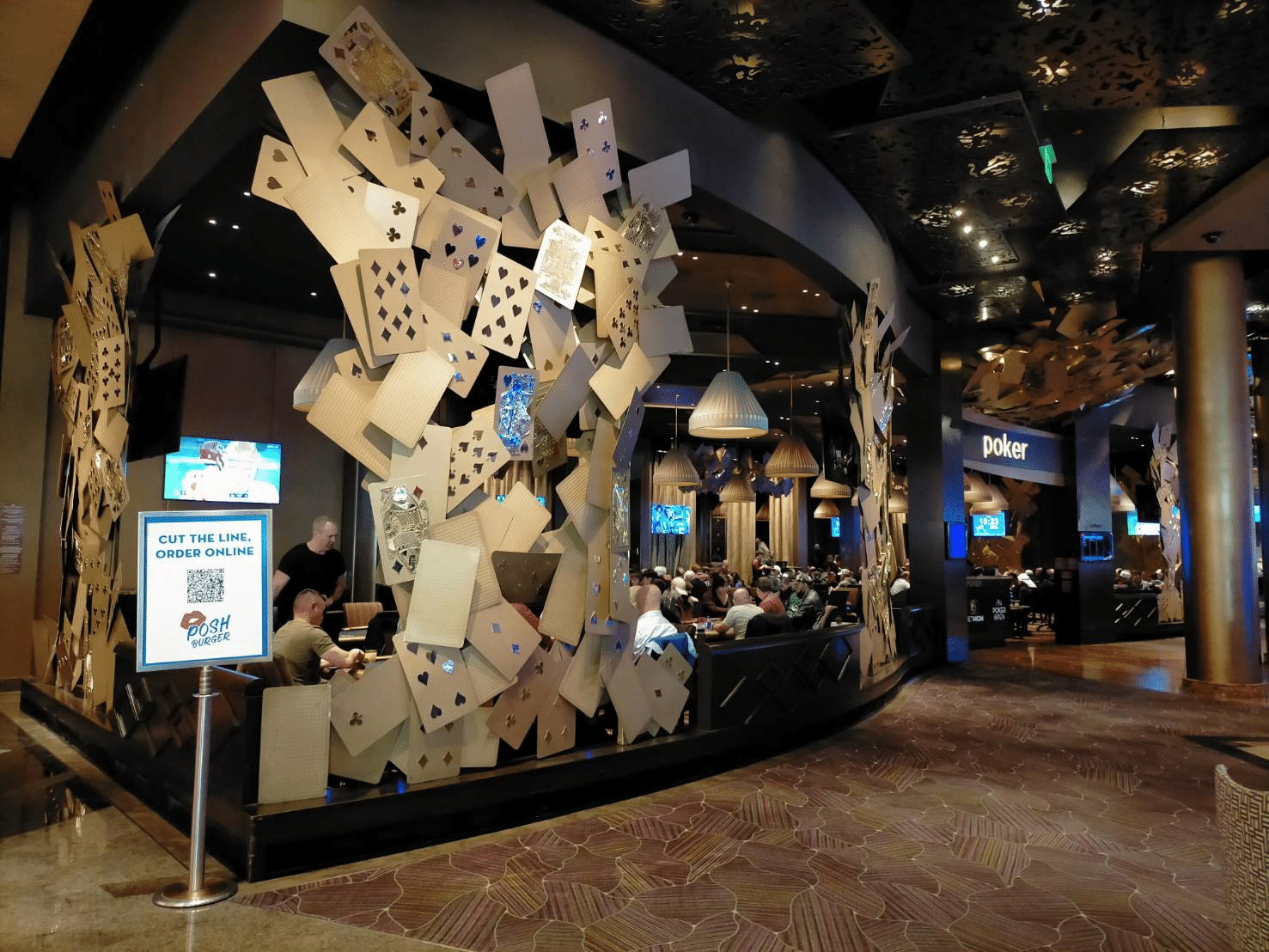
Aria became my favorite poker room of the trip: spacious seats (being 8-max), a clean facility, a great burger place next door, delicious yellow curry, Perrier with lime, and cute apparel.
At my first 2-5 table at Aria, there were plenty of walks, and A5s was showing up in 3bets and 4bets -- poker as I knew it was being played.
"1-3 and 2-5 really are on different levels."
I didn't think I'd lose, but figured my winrate might not be that high. After 8 hours of enjoyable play, my first 2-5 result was +50BB.
I savored the joy of winning my first session at higher stakes and reported back to the other members at the PPC House.
Everyone told me, "That situation at a 2-5 table is abnormal -- you should have changed tables sooner." I regretted not table-changing to maximize my winrate.
The next day, I heard that the 2-5 games at the Wynn were soft, so I decided to try it.

As soon as I sat down at 2-5, I found a table that looked just like the usual 1-3 games, nothing like the 2-5 I'd played the day before.
The biggest difference between 1-3 and 2-5 is that at 2-5, the concept of "soft" and "tough" tables actually exists. *At 1-3, there are no skilled players regardless of where you sit.
Pleasantly surprised by the level of 2-5 play, I ended up grinding at the Wynn consistently until my departure.
Results: Goodbye, Las Vegas
After I started frequenting the Wynn, my 2-5 results were solid, and by the time I left, I had accumulated roughly $4,300 in winnings.
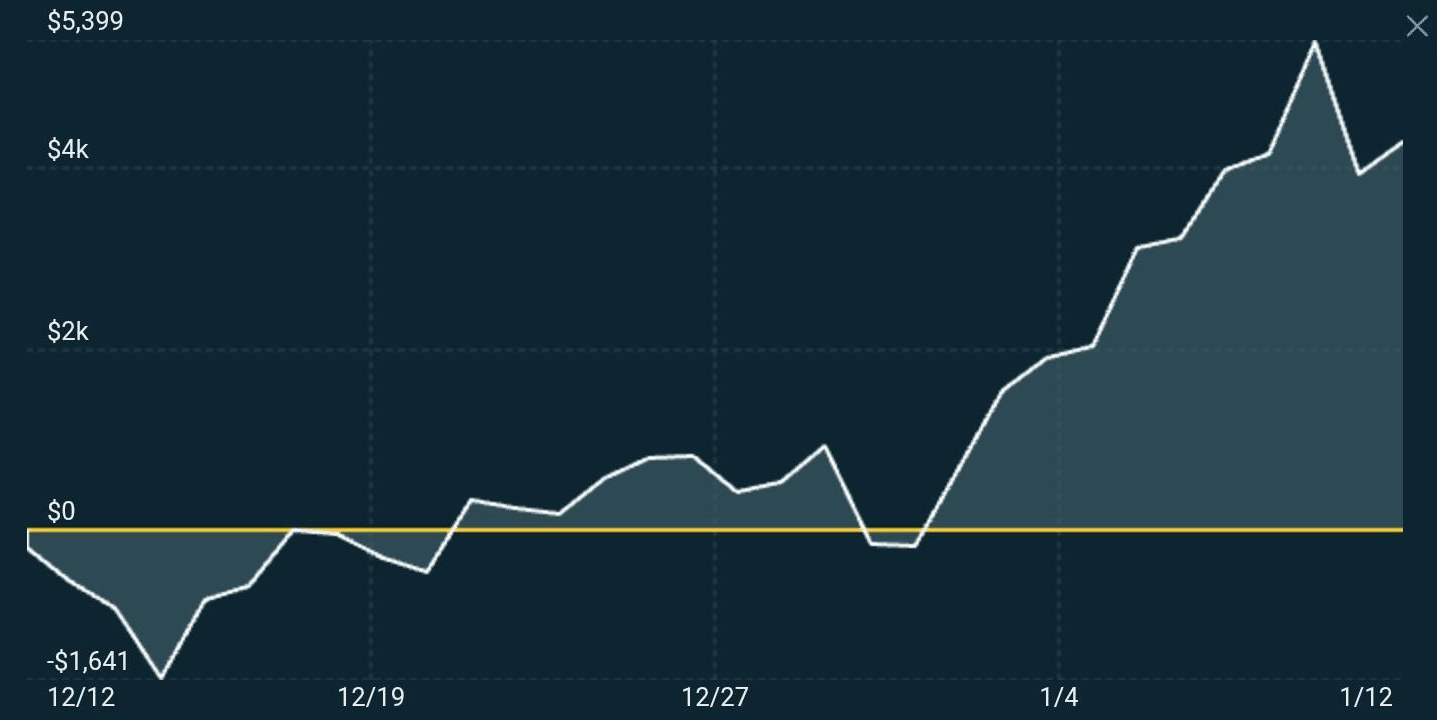
While winning about $4,000 in one month was a significant sum, it's a modest win over a full month, so I want to continue studying and practicing to win even bigger.
Over this month, I gained irreplaceable experiences: the struggles of communal living, the pain of losing, the joy of winning, and the lifestyle of doing nothing but poker.
Looking back, during the most intense grinding periods, the suffering probably outweighed the fun.
But like school club activities, when it was over, I thought "I want to do this again."
I fulfilled my dream of playing poker in Las Vegas, but I didn't get to challenge stakes like 5-10 or 10-20.
Next time I come to Las Vegas, I'd like to have higher stakes on my radar.
But what I felt most when this trip ended was:
I'm so glad I ended on a win!!!
Japanese food is cheap and delicious!!!
That about sums it up.
Thank you so much for reading this far.
If this article helped you feel some of the excitement and struggles of playing poker abroad for a month, I'd be very happy.
This article has also been made into a video on Pacific Poker Club's YouTube channel. If you're interested, please check it out.
You can also apply for the US Internship program that I participated in. The application methods are as follows.
1. Achieve the required hours and results in ring games at PPC partner stores
2. Pass the special selection exam held irregularly at MUSASHI POKER ROOM
If you're interested, please give it a try!
I am truly grateful to MUSASHI POKER ROOM and Pacific Poker Club for giving me this dreamlike opportunity to spend a month playing poker in Las Vegas.
Thank you.
What You Should Do to Win Consistently at 1-3/2-5
Those of you who read the personal account above may have noticed that my results clearly improved in the second half compared to the first.
In this section, I'll write about just three things: what changed before and after my results improved, and what I felt through this staking program that you should do to win consistently at 1-3/2-5.
If someone had told me this, maybe I wouldn't have lost 500BB in the first five days...
Here are the conclusions.
1. Put drunks in your OOP and grandpas in your IP
2. Identify the limp range
3. Show your bluffs with weak hands
1. Put Drunks in Your OOP and Grandpas in Your IP
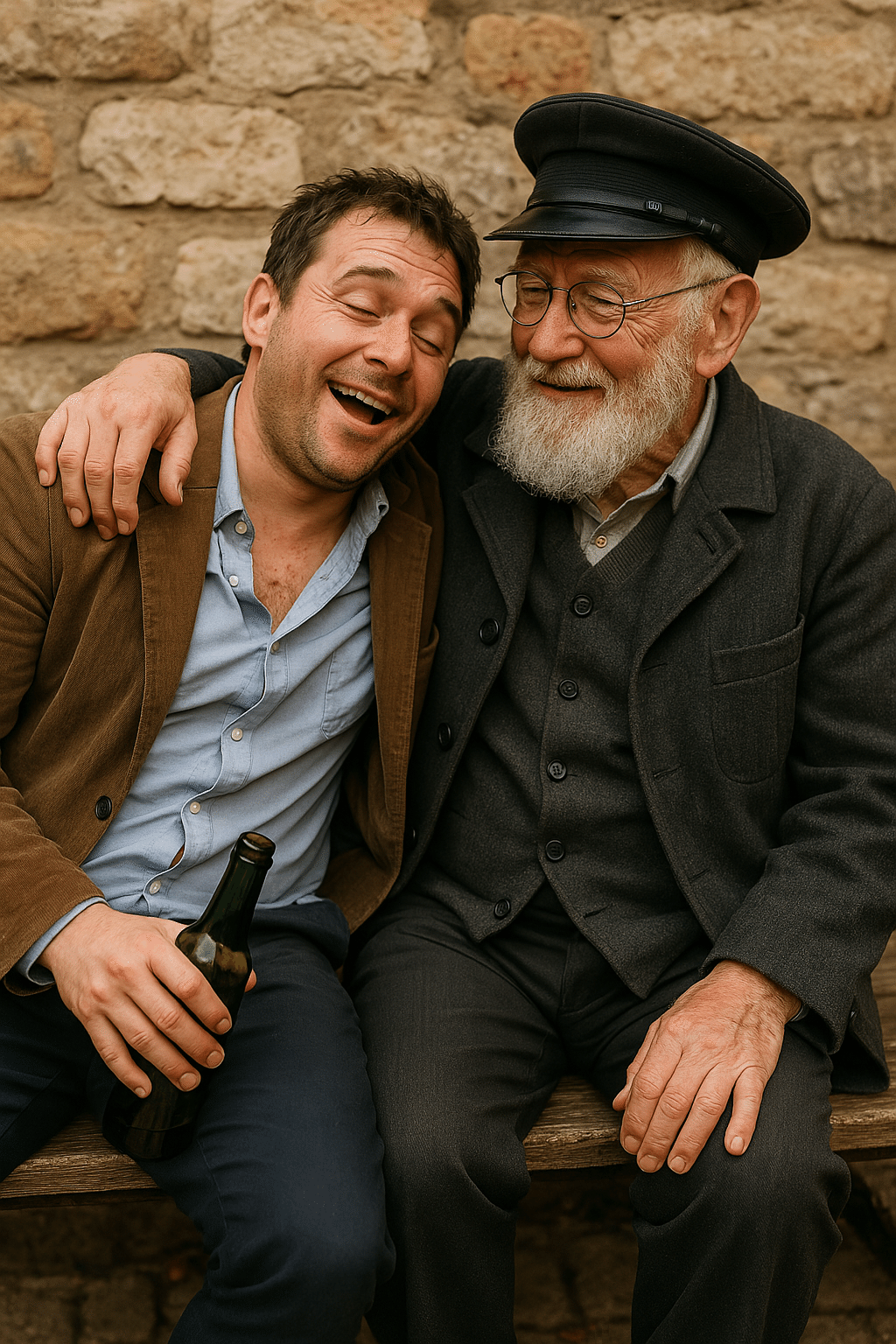
At 1-3 and 2-5, there are many loose preflop players who will cold call from IP with all sorts of hands, even against your larger opens.
Obviously, compared to heads-up, going multiway always reduces your equity.
Furthermore, in an environment populated by "top pair & draw donk-bettors" and "bet whenever checked to" players, going to the flop multiway means you'll face bets at a high frequency.
Even if you enter with only strong preflop hands, if you don't flop a strong hand, you'll frequently be forced to surrender equity. (*Often the bet sizes make folding the correct odds-based decision.)
In this environment, even with good play, if you run bad, your results can easily trend downward in the short term.
To prevent this, it's effective to surround yourself in IP with tight preflop players (commonly known as "grandpas").
Sitting to the left of a player who makes huge mistakes to maximize your hourly rate is fine, but from the perspective of stabilizing your results, choosing the seat to the right of grandpas is also an important consideration.
At 1-3 and 2-5, wherever you sit, those of us who study hard are surely +EV. (Words from my friend Yamashii who went with me.)
Also, by putting loose preflop players (commonly known as "drunks") in your OOP, you get to play IP against their weak ranges, making it very hard to lose.
After I started paying attention to this during seat selection, my graph trended upward. (It was just a heater.)
2. Identify the Limp Range

When you ask people who've played overseas, many will tell you:
"The limp range is weak."
There are many players like this, and I don't think this advice is wrong.
But "the limp range is weak" is only true most of the time.
Obviously, observing the actual players at your table is extremely important.
Here are three types of limp ranges I encountered in Las Vegas.
Type 1: Players who split their limp range and open range, with weak hands in the limp range and strong hands in the open range
Type 2: Players who split their limp range and open range, with hands strong enough to open in the limp range, and only hands strong enough to 3bet EP in the open range
Type 3: Players who never open raise, with a limp range roughly equivalent to a proper open range
Most limpers at 1-3 and 2-5 fall into Type 1. Against them, you can isolate wide and profit by getting heads-up.
The problem arises when you mistake a Type 2 or Type 3 player's limp for a Type 1 player's.
Type 2 and Type 3 players won't fold to isolation raises, and if you're isolating wide, even on boards that would normally favor the isolator, your opponent often has the stronger range.
If you don't realize this and choose aggressive actions, you'll incur significant losses.
On the other hand, since suited connectors and similar hands aren't in their range, you can relatively easily take down pots on low boards.
Rather than determining CB frequency based on GTO strategy as you've studied it, you should base your decisions on whether your opponent's hand range actually connects with the board.
To avoid this mistake, don't make aggressive strategic changes right after sitting down. Don't underestimate your opponents just because it's 1-3 or 2-5.
Once I focused on labeling opponents first, my graph trended upward. (It was just a heater.)
3. Show Your Bluffs with Weak Hands
When you ask people who've played overseas:
"They never fold, so just bet for value."
"They never fold, so you don't need to bluff."
Many will tell you this. There are many players like that, and I don't think this advice is wrong. (Second time.)
However, people playing poker at 1-3 and 2-5 are still human.
Just as we fold AK without hesitation to a grandpa's 3bet, they too can fold to large bets from a player they believe never bluffs.
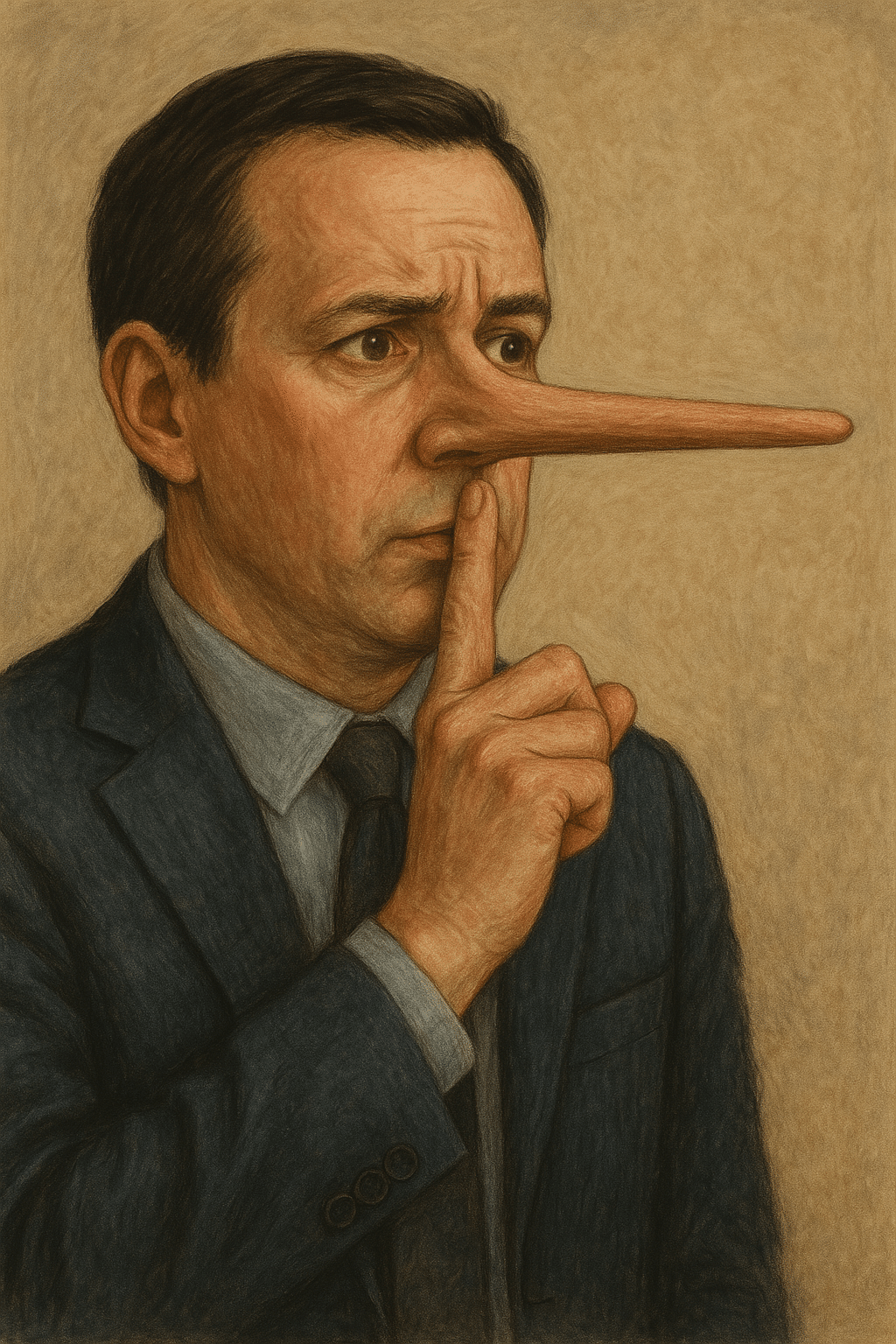
What matters is making your opponents think "they might be bluffing."
To achieve that, it's important to get caught bluffing with weak starting hands.
The weaker and more absurd the hand you get caught with, the more they'll call you down. (Based on my personal experience.)
Humans unconsciously search for reasons to call.
Once an opponent has seen a bluff from you, they'll call more often, which means you can dramatically reduce your bluff frequency after that without any issues.
By bluffing until you get caught at least once, my graph trended upward. (It was just a heater.)
These three perspectives are biased thinking -- they're not specific play lines, and there are probably many parts that are wrong.
But I figured nobody else would bother writing about these aspects that differ from theoretical study, so I decided to share them.
Furthermore, after adopting this approach (setting aside the "it's just variance" criticism), it's a fact that my results improved dramatically.
I hope this can serve as some help or a hint for those struggling with results in overseas cash games.
Found this helpful?
Bookmark this page to revisit anytime!
Ctrl+D (Mac: ⌘+D)
Found an error or have a question about this article? Let us know.
✉️ Contact Us